Most ‘must-watch Korean movies’ lists are just the same eight Wikipedia synopses shuffled into a different order, ranked by award count. That tells you nothing about which one to actually press play on tonight. This guide sorts the essential films by what they’re actually useful for — building context before a trip, easing a squeamish first-timer in, or understanding why Bong Joon-ho and Park Chan-wook keep winning at Cannes — so you watch the right one first instead of the most-hyped one first.

What do most ‘must-watch Korean movies’ lists get wrong?
They treat the films like a trophy case instead of a toolbox. Sure, Parasite took Best Picture at the 2020 Oscars and Oldboy walked away with the Grand Prix at Cannes back in 2004 — but stacking films by award count tells you nothing about what each one is actually good for. Hand someone Memories of Murder as their in-flight movie before a Busan trip and you’ve ruined both the flight and the film; it’s a slow, damp procedural that wants your full attention, not something to half-watch at 30,000 feet. Meanwhile, A Taxi Driver watched the night before you visit Gwangju’s memorial sites lands completely differently than the same film watched on a random Tuesday with nothing at stake.
So instead of another ranked list, here’s the honest version: what each film actually unlocks, who should watch it first, and which two you should never queue up back to back (there’s a real reason for that one, and it isn’t squeamishness).
Which Korean movie should first-timers actually start with?
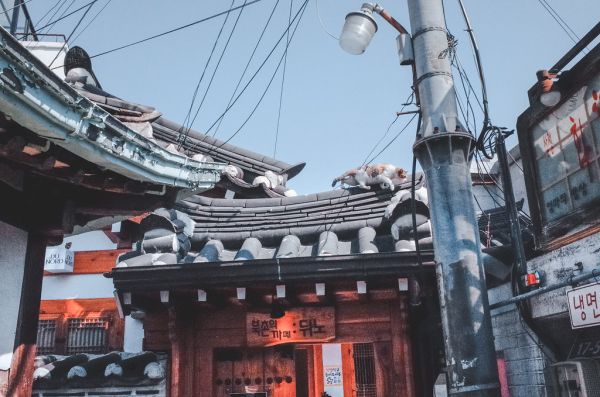
Parasite (2019, dir. Bong Joon-ho, ~132 min) is still the right on-ramp — not just because it’s the one title your coworkers have actually heard of, though that helps. It’s easy to find with solid official English subtitles on Netflix and Coupang Play, it moves at a genuine thriller’s clip, and it doubles as a crash course in something every visitor to Seoul eventually notices on foot: the vertical gap between the semi-basement banjiha apartments tucked into hillside neighborhoods and the hilltop houses with private gardens just a few blocks up the same slope. You don’t need any prior context to follow the plot, and it rewards a second viewing once you’ve actually walked a hillside neighborhood with semi-basement housing in Seoul and clocked that contrast in real life instead of on a screen.
- Best for: a total first-timer to Korean film
- Skip if: you’ve already seen it three times — move down this list instead
What should you watch before riding the KTX to Busan?
This is the one nobody frames as travel prep, but should be: Train to Busan (2016, ~118 min) follows the actual KTX bullet-train route from Seoul Station down to Busan, and watching it before you make that same trip is a surprisingly good way to mentally map the journey — you’ll clock the platform layouts and carriage design with a small jolt of recognition. It’s a zombie-outbreak thriller, not deep cinema, and that’s the whole appeal: it’s the least homework-feeling entry on this list, built for a plane seat or the train ride itself.
Trade-off: if gore isn’t your thing, this is the one to skip — the enclosed-train setting means the tension barely lets up for two hours straight.
Which film actually explains a real, unresolved piece of Korean history?
Memories of Murder (2003, dir. Bong Joon-ho, ~131 min) is loosely based on an unsolved string of murders from rural Gyeonggi Province in the 1980s, and depending on who you ask, it’s a better Bong Joon-ho film than Parasite — especially for anyone who wants a feel for small-town, pre-2000s Korea: the outdated police work, the fog hanging over the rice paddies, the specific frustration of a case that, at the time the film was made, had never been closed. It’s slower and bleaker than Parasite, so don’t start here if you want something breezy. Start here when you want to see how Korean cinema turns a real, unresolved national wound into art instead of tidy Hollywood closure.

Which movie should you watch before or after visiting Gwangju?
A Taxi Driver (2017, ~137 min) dramatizes the 1980 Gwangju Uprising through a Seoul taxi driver who unknowingly drives a German journalist straight into the crackdown. If the May 18 National Cemetery or the old provincial hall — now folded into the Asia Culture Center — is anywhere on your Gwangju itinerary, watch this first. It turns a memorial visit from an abstract history lesson into something you feel before you’ve even arrived. Of everything on this list, this is the one film I’d call mandatory rather than optional if Gwangju is on your route.
Oldboy or The Handmaiden — which Park Chan-wook film first?
Park Chan-wook has three films that belong on any serious must-watch list, and they ask for completely different moods — don’t binge them in one weekend, you’ll regret it.
- Oldboy (2003, ~120 min) — the one everyone name-drops first, the middle chapter of his ‘Vengeance Trilogy,’ Grand Prix winner at Cannes, and home to that famous single-take hallway fight and one of the most quoted twist endings in modern film. Brutal, unsettling, essential. Watch this for the movie that put Korean cinema on the international map.
- The Handmaiden (2016, ~145 min) — a visually sumptuous period thriller set across 1930s Korea and Japan, better suited to anyone who cares about hanbok and hanok architectural detail, or just wants something gorgeous instead of grim.
- Decision to Leave (2022, ~138 min) — won Best Director at Cannes, set partly in a present-day coastal town, and the strongest pick if you want to see what contemporary Korea looks like on screen rather than its historical or ultra-violent counterpart.
The trade-off that matters: Oldboy is the reputation-maker, but it’s also genuinely disturbing; Decision to Leave is the one to hand someone who insists they ‘don’t do violent movies’ but still wants Park Chan-wook’s visual signature. Whatever you do, don’t watch Oldboy and The Handmaiden back to back — both run heavy, and stacking them just numbs you to what makes each one actually work.

What’s the one arthouse pick worth the slower pace?
Burning (2018, dir. Lee Chang-dong, ~148 min), adapted loosely from a Haruki Murakami short story, is deliberately slow, ambiguous, and unresolved by design — closer to a mood than a plot, and it will frustrate anyone expecting a clean ending. It’s shot around Seoul’s quieter outer edges and near Paju, close to the DMZ, which gives it a specific, uneasy sense of place: half-city, half-borderland. This isn’t a good starting film. It’s the one you watch after you’ve already seen two or three others on this list and want something that lingers instead of resolves.
Where can you actually watch these on a big screen in Korea?
If you’re already in Seoul, the Korean Film Archive (KOFA) in Sangam-dong, near the Digital Media City area, regularly runs free or low-cost screenings of Korean classics with English subtitles — often on restored prints that look noticeably sharper than anything you’ll find streaming. It’s a far better way to experience an older title like Oldboy than squinting at a laptop screen, and it pairs easily with a day trip that also covers the World Cup Park area nearby. Programming rotates rather than staying fixed year-round, so check the current schedule before you go.
Streaming vs. theater: which actually wins?
- Netflix / Coupang Play — best for convenience, and Parasite, Train to Busan, and Burning are commonly available with reliable official subtitles.
- KOFA screenings — best for classics like Oldboy or Memories of Murder, where a restored print and a theater audience genuinely change the experience.
- DVD/Blu-ray import — still worth it for Park Chan-wook films specifically, since some special editions include extended cuts not available on any streaming platform.

So what’s the actual watch order?
If you want a sequence instead of a scattergun list, here’s the order that builds understanding rather than just checking boxes off a spreadsheet:
- Parasite — orientation, no context needed
- Train to Busan — fun, low-stakes, geography-building
- Oldboy — the reputation film, brace yourself
- A Taxi Driver — essential if Gwangju is on your itinerary
- Memories of Murder — deeper, bleaker, rural Korea
- Decision to Leave — contemporary Korea, less violent
- The Handmaiden — visual/historical payoff
- Burning — save this one for last
Watching them in this order means each film adds a layer instead of repeating the same ‘gritty Korean thriller’ beat eight times over — which is the exact fatigue most ranked lists accidentally cause.
자주 묻는 질문 (FAQ)
What is the single best Korean movie to start with if I’ve never seen one?
Parasite. It requires zero background knowledge, is widely available with solid English subtitles on Netflix and Coupang Play, and moves quickly enough to hold attention even for viewers who don’t usually watch subtitled films.
Are these movies actually available with English subtitles outside Korea?
Yes — Parasite, Train to Busan, Burning, and Decision to Leave are commonly available on major streaming platforms with official English subtitles. Older titles like Oldboy and Memories of Murder are easiest to find via home video releases or licensed streaming catalogs, which vary by region.
Do I need to watch Oldboy first since it’s the most famous?
No, and honestly it works better as your third or fourth film rather than your first. It’s intense and disturbing by design, so easing in with something like Parasite or Train to Busan first makes the rest of the list land better.
Which movie should I watch before visiting Gwangju specifically?
A Taxi Driver. It dramatizes the 1980 Gwangju Uprising and gives real emotional context before visiting memorial sites like the May 18 National Cemetery, turning the visit into something more than a history-textbook stop.
Is it worth watching Korean movies in a theater in Korea instead of streaming?
For classics, yes. The Korean Film Archive (KOFA) in Seoul’s Sangam-dong area screens restored prints of older films like Oldboy with English subtitles, and the print quality and theater experience are noticeably better than most streaming versions.