Most articles answering “why is Korean culture unique” just list nouns — kimchi, K-pop, hanbok, hierarchy — as if uniqueness were a checklist you tick off. It isn’t. What actually sets Korean culture apart is that wildly contradictory worlds sit inside the same block, the same meal, sometimes the same hour, held together by rules everyone somehow already knows without ever being told. What follows walks through the specific places — a Yongsan bathhouse, a Bukchon alley, a Hongdae exit — where you can actually feel that contradiction instead of just reading a sentence about it.

What Do Most “Why Korean Culture Is Unique” Guides Get Wrong?
Search this phrase and you’ll get near-identical listicles: Confucian respect for elders, a 5,000-year history, kimchi, Hangul, K-pop’s global reach. All true. All also so generic they could describe several East Asian countries and still be technically correct. That’s the problem. Naming individual traditions doesn’t explain what makes the texture of daily life in Korea feel different from Japan or China, both of which share Confucian roots, chopsticks, and rice-based cuisine.
The actual answer isn’t a list of things. It’s a pattern: Korea keeps extremely rigid, hierarchical, rule-bound behavior running in parallel with extremely intimate, collectivist, and hyper-modern behavior — often in the exact same physical space. Nowhere is this clearer than in a jjimjilbang.
How Does a Bathhouse Explain This Better Than a History Book?
Places like Dragon Hill Spa in Yongsan (reportedly closed for redevelopment in recent years, so confirm current status before planning a visit) or Spa Land in Busan’s Centum City (open roughly 6am–midnight, not around the clock) charge a flat entry fee, usually somewhere in the ballpark of 10,000–15,000 KRW (roughly $8–12), for unlimited access. For that price, strangers of every age and body type sit naked together in gender-separated hot tubs, then change into matching pajamas and nap shoulder-to-shoulder with other strangers — kids, grandparents, exhausted office workers — in co-ed heated-floor rooms. Nobody here finds any of this remarkable. That’s exactly the point.
- Nudity in front of strangers barely registers as a social event — people scrub each other’s backs and chat about nothing while fully naked next to people they’ve never met.
- Strict gender separation still governs the bathing itself, so the rule structure never actually vanishes — it just relocates to a different room.
- Overnight stays are common enough that missing the last subway is basically an excuse to treat a jjimjilbang like a cheap, communal hotel.
That mix — radical bodily openness sitting right next to rigid segmentation, wrapped in low prices and round-the-clock convenience — isn’t something you’ll find described quite the same way in neighboring bathhouse cultures.
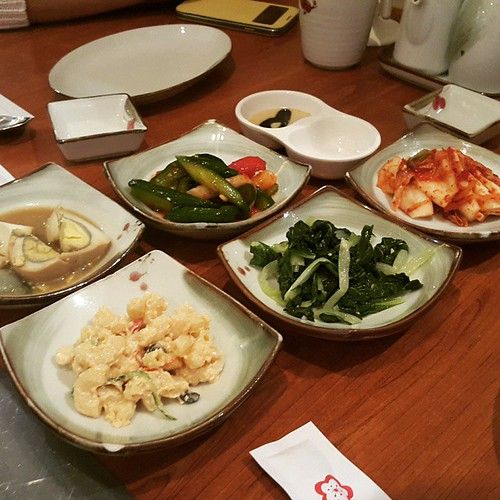
Why Do Free Side Dishes Come With Such Strict Drinking Rules?
Order almost anything at a Korean restaurant and a spread of banchan — kimchi, seasoned bean sprouts, pickled radish, whatever the kitchen feels like sending out that day — lands on the table unordered, unbilled, and refillable for free as many times as you flag someone down. It reads as pure, no-strings generosity. Then someone opens a bottle of soju, and the same table turns into a small choreography exercise:
- You pour for others, never for yourself.
- When pouring for someone older, you use two hands to support the bottle.
- When drinking in front of an elder, you turn your head away before you sip.
A bottle of soju costs only a few thousand won at a convenience store, so none of this is about scarcity — it’s status, made physical, layered directly on top of a dining culture built on unlimited free sharing. Generosity here isn’t casual; it’s scripted. That combination is exactly what a lazy “Koreans are hospitable” line flattens into nothing.
Why Does Wearing a Costume Get You Free Entry to a Palace?
Rent a hanbok near Gyeongbokgung or Changdeokgung — usually somewhere around 15,000–25,000 KRW for a few hours — and you walk into the palace grounds for free, while anyone in regular clothes pays a small ticket fee (around 3,000 KRW). This isn’t a happy accident or a tourist gimmick that grew on its own; it’s a deliberate incentive designed to keep hanbok visibly moving through historic sites. And it tells you something most guides skip past: a lot of “traditional Korean culture” you meet as a visitor isn’t a fossil being carefully preserved behind glass — it’s being actively re-manufactured as a living, monetized experience, and Koreans themselves seem entirely comfortable with that artificiality. The palace doesn’t feel like a museum diorama. It feels like a stage everyone’s quietly agreed to use.
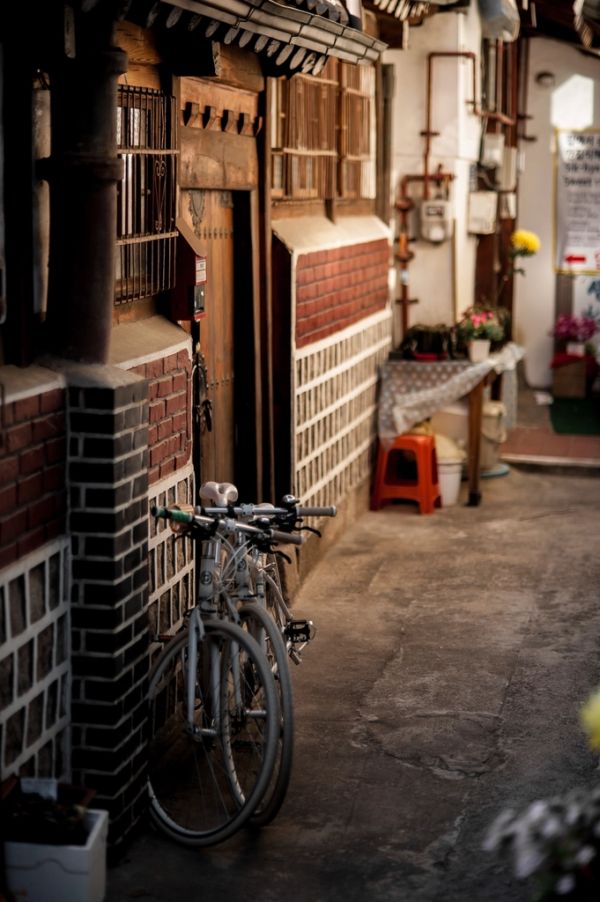
Why Is a Famous Tourist Neighborhood Full of “No Noise” Signs?
Bukchon Hanok Village gets photographed constantly, but it isn’t a preserved village in the folk-park sense — real families live behind many of those hanok gates, doing ordinary things like leaving for work or bringing in groceries. That’s why the unspoken rules matter: visits are best kept to daytime, roughly 10am–5pm, with quiet, low-key behavior expected, especially early morning or evening when residents are actually commuting or trying to rest. There’s no gate, no ticket, no staff enforcing any of it. The whole system runs on the assumption that visitors will self-regulate out of basic respect — which is either a small miracle of social trust or a minefield for a first-timer who wanders up to a private gate at 7am chasing a photo. Compare this to Gyeongju’s Hanok Village, which leans much more purely touristic, and you start to notice that “hanok village” isn’t one category of place in Korea — some are living neighborhoods, some are stage sets, and knowing which one you’re standing in changes how you should behave.
How Can the Same City Host a Templestay and Hongdae Busking on the Same Weekend?
This is the contradiction I find most telling. A short KTX ride or drive from Seoul, temples like Jogyesa in the city center or Golgulsa near Gyeongju run one-day or overnight templestay programs, usually somewhere in the range of 50,000–100,000 KRW, built around monastic meals, silent meditation, and a 108-bow ceremony designed to physically wear the ego down until it goes quiet.
Meanwhile, on Friday and Saturday nights, walk out of Hongik University Station Exit 9 and you’ll find street busking and choreographed dance crews running K-pop routines for crowds of teenagers filming everything on their phones — the exact cultural export machine that turned “Korean culture” into a global search term in the first place.
Here’s the part that catches visitors off guard: it’s often the same generation, sometimes the same person, doing both. A 24-year-old office worker might book a templestay for a mental reset one month and be front-row at a Hongdae busking set the next. Neither one cancels the other out. Korean culture doesn’t seem especially interested in resolving that tension the way you might expect — it just runs both systems in parallel and lets people move between them.

Why Are Convenience Stores Basically Public Living Rooms?
CU, GS25, and 7-Eleven branches are everywhere in Korea, open 24 hours, and plenty of them have a small window counter or plastic stools where you can eat instant noodles or a triangle kimbap for the cost of pocket change. In a culture often described — accurately — as collectivist, group-oriented, and family-centered, the convenience store is where honbap (eating alone) quietly lives. It’s not sad or unusual to see someone eating solo at 1am under fluorescent lighting; it’s just one more parallel system, built for the night someone doesn’t want the group dinner, the shared banchan, or the pouring etiquette that comes with it. Korea’s collectivism doesn’t erase individual space — it just built a very specific, very cheap, very efficient escape hatch for it.
What’s the One Etiquette Mistake That Reveals How Deep This Goes?
Almost every first-timer trips over this: many restaurants with raised, heated ondol floor seating expect you to remove your shoes before stepping up, exactly as you would at someone’s home, a guesthouse, or certain cafés. It seems like a minor courtesy until you realize it’s not actually a restaurant rule — it’s a floor-culture rule that predates restaurants entirely, rooted in a heating system and a sitting posture that shaped how Koreans have used indoor space for generations, and it still quietly governs brand-new cafés in glass buildings today. The real mistake isn’t the shoes. It’s assuming “modern” spaces in Korea have shed the older logic underneath them. They haven’t. They’ve just built over it.
Where Does This Contradiction Show Up at the National Level?
You can see the same pattern at country scale at the DMZ. Tours must be booked in advance through an organized operator — you can’t just show up — typically running about 4–8 hours from Seoul and costing somewhere in the range of 50,000–150,000 KRW, passport required. Stand at an observation point there and you’re looking at an unresolved, technically still-active war, a few hours’ ride from a capital city of glass towers, 24-hour convenience stores, and Hongdae’s K-pop crowds. That gap — ultra-modern, globally influential culture sitting directly beside an unfinished Cold War border — is maybe the largest version of the same thing you find in a bathhouse or a banchan table: two realities that don’t cancel each other out, coexisting under an agreed-upon set of rules.
How Should You Actually Experience This in One Trip?
Don’t try to see “Korean culture” as a sightseeing category to check off. Instead, deliberately whiplash yourself between extremes in a short window:
- Morning: hanbok rental and a palace (Gyeongbokgung or Changdeokgung), then a quiet daytime walk through Bukchon.
- Afternoon: a regular meal anywhere, paying attention to the banchan refills and, if you’re with a group, the soju pouring order.
- Evening: Hongdae near Exit 9 for busking and street dance crowds.
- Late night: a 24-hour jjimjilbang for an overnight soak-and-nap instead of a hotel (Dragon Hill Spa has reportedly closed, so check current listings for an open option).
- If you have extra days: a templestay at Jogyesa or Golgulsa, and a DMZ day tour, booked ahead — the two furthest poles of the same country.
Do that sequence and the answer to “why is Korean culture unique” stops being a list you read and turns into something you physically felt in under 48 hours.
자주 묻는 질문 (FAQ)
Is Korean culture really that different from Japanese or Chinese culture?
The individual ingredients overlap a lot — Confucian etiquette, rice-based food, shared history — so listing traditions won’t show the difference. What’s distinct is the specific way Korea layers rigid hierarchy directly onto intense collective intimacy (a bathhouse, a shared banchan table) rather than keeping formality and closeness in separate spaces.
What’s one Korean cultural concept I won’t find an easy English word for?
Jeong is the closest example — a slow-built, almost involuntary attachment or warmth toward people, places, or things you’ve shared repeated experiences with, even ones you didn’t choose (a coworker, a neighborhood). Nunchi, the skill of reading a room’s unspoken mood, is another one that shapes daily interactions far more than most visitors expect.
Do I need to memorize etiquette rules before visiting Korea?
Not memorize, but know the high-frequency ones: take off your shoes on raised ondol floor seating, don’t pour your own soju, use two hands when pouring for someone older, and keep quiet and photo-conscious in residential areas like Bukchon Hanok Village, especially outside daytime hours.
What’s the biggest mistake first-time visitors make regarding Korean culture?
Treating it as a checklist of sights rather than a set of behaviors that shift by context — the same person who’s formal and rule-bound at a family dinner table can be completely relaxed getting a midnight snack at a 24-hour convenience store. Missing that flexibility is why a lot of trip planning ends up feeling flat.
Can I actually experience both ‘traditional’ and ‘modern’ Korean culture in a single day?
Yes, and it’s arguably the best way to understand the country — a hanbok rental and palace visit in the morning, a regular meal with banchan at lunch, Hongdae’s street performances at night, and a jjimjilbang like Dragon Hill Spa or Spa Land to sleep, all fit comfortably into one day in Seoul.