Most guides treat Korean convenience stores as one generic blur — “just grab a triangle kimbap and go.” That skips the part that actually matters: CU, GS25, 7-Eleven, and Emart24 are four separate companies, each running its own supply chain and its own snack lineup, and the item you fell in love with under one logo yesterday might simply not exist under any of the other three. Once you know what each name actually stands for, a five-minute stop stops being random and turns into the same small, deliberate choice you’d make picking one supermarket’s house brand over another’s.
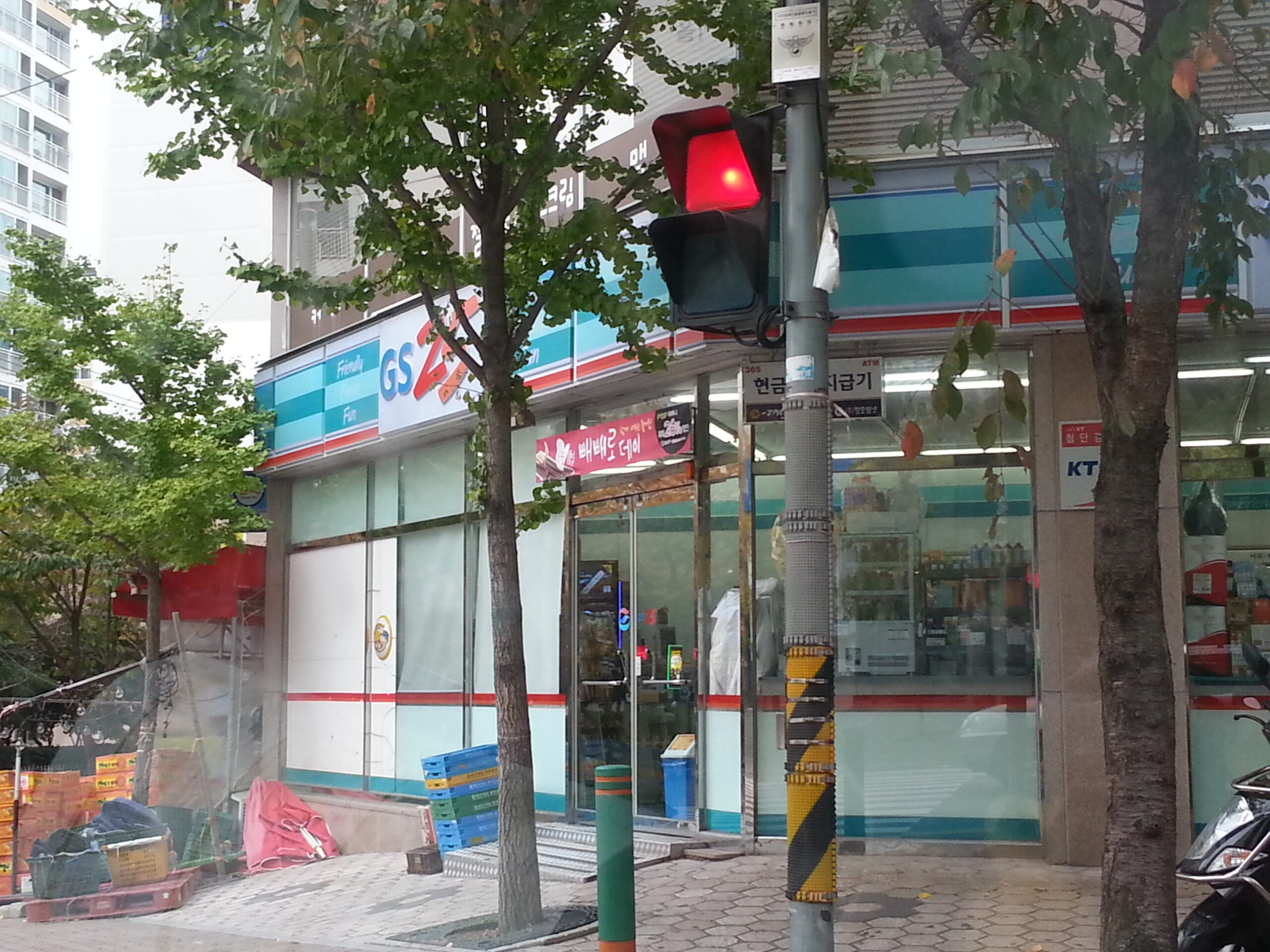
What are the main Korean convenience store names?
Four chains dominate nearly every street corner, subway exit, and hiking trailhead in Korea — and each one belongs to a completely different retail group, which is exactly why they don’t feel interchangeable once you start paying attention:
- CU — operated by BGF Retail. It’s generally regarded as the largest chain by store count in the country, and one of the more profitable ones per outlet, which is part of why you’ll spot its navy-and-white logo almost everywhere you turn.
- GS25 — run by GS Retail. It trails CU slightly on number of locations but tends to out-earn its rivals on total sales, largely on the strength of its food business rather than snacks.
- 7-Eleven Korea — the local arm of the global brand, run independently from its US or Japanese counterparts, with a wide, dependable footprint and its own separate product development.
- Emart24 — tied to the Emart supermarket chain under the Shinsegae group, the quieter fourth option that’s steadily expanded without the marketing noise of the other three.
You’ll see all four within a few blocks of each other in neighborhoods like Hongdae or Gangnam, and sometimes two of them sit almost directly across the street from one another. That’s not a design accident — it’s just how densely these chains compete for the same foot traffic.
Why does the store name actually matter?
Here’s the part most travel guides skip entirely: each chain sells its own private-label snacks and meals, and none of it overlaps. There’s no shared “convenience store brand” quietly supplying all four behind the scenes — they’re competitors sourcing from different manufacturers, not siblings splitting the same catalog.
- GS25 sells its own food line under the name Youus.
- CU sells its private-label food under Heyroo.
- 7-Eleven runs its own private-label meal and snack line, separate from the other chains’ brands.
- Emart24 leans on items branded to the Emart name itself, including some budget-friendly staples borrowed from Emart’s own no-frills product lines.
Practically, this means if a friend tells you “get the cheese dosirak, it’s amazing,” you actually need to know which store they meant — walk into the wrong logo and that exact lunchbox just isn’t on the shelf. It’s a small thing, but it’s the difference between advice that sounds accurate and advice that actually gets you the thing you were promised.
CU vs GS25 vs 7-Eleven vs Emart24 — which one should you walk into?
They’re not interchangeable, and each has earned its reputation for a specific reason:
- CU wins on sheer coverage and — oddly — on excitement. With the biggest footprint, it’s the one you’ll most often stumble into by default, but it’s also the chain that leans hardest into splashy, short-lived collaborations: pop-culture tie-ins, seasonal flavor drops, snack packaging built around whatever K-drama or webtoon is trending that month. Miss the window and it’s gone.
- GS25 has built its reputation specifically on food quality, especially its dosirak (lunchbox) lineup and its rotating dessert case near the register. If you ask a local “which convenience store actually has a decent meal,” GS25 is usually the answer.
- 7-Eleven Korea covers similar ground to the other two but experiments less. Think of it as the safe, wide-coverage option rather than the exciting one — reliability is basically the entire pitch.
- Emart24 is the quiet fourth chain, leaning on its Emart ties for value pricing rather than chasing headlines with new-product buzz. Worth ducking into when it’s the nearest door; rarely worth a special detour.
The trade-off in one line: pick CU or GS25 if you want the limited-edition snack everyone on social media is talking about this week, pick 7-Eleven or Emart24 if you just want something dependable near your hotel.
What should you actually order once you’re inside?
The one first-timers get wrong: triangle kimbap
The signature item across every one of these chains is samgak gimbap — triangle-shaped rice balls wrapped in seaweed, usually priced somewhere in the range of 1,000 to 1,900 won each depending on the filling, still under $1.50. They’re absurdly cheap for what you get, but nearly every first-timer fumbles the plastic wrapper, which is folded in a specific sequence — pull the tab on one side, then the other, then peel back, not rip straight through. It sounds trivial until you’re standing at the register unwrapping one badly while the seaweed slides off in your hand. There’s a small diagram printed right on the wrapper; check it before you attempt the pull.
The cheap full meal: kimbap, ramyeon, and a drink
A full convenience store meal — one triangle kimbap, a cup of instant ramyeon, and a drink — typically lands somewhere around 4,000 to 6,000 won, roughly the price of a coffee back home. Compare that to a similar sit-down meal at a casual restaurant, generally closer to 8,000 to 12,000 won, and you’re looking at roughly half the price for something you can eat in ten minutes flat.
Don’t skip the hot food counter
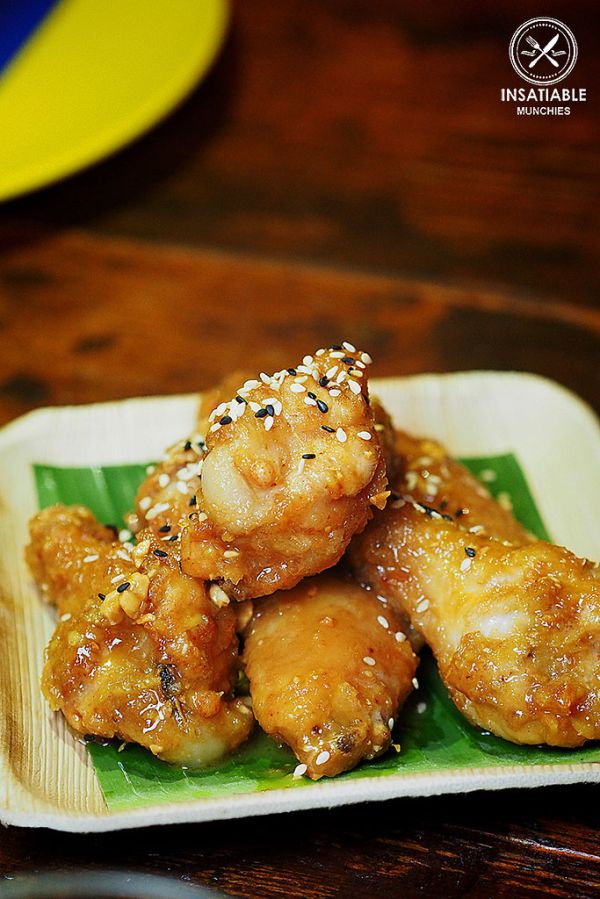
Most CU and GS25 branches keep a fried-food case near the register: fried chicken pieces running roughly a dollar or so apiece, fish cakes, and corn dogs. Also worth trying is the hot bar (핫바) — a warmed fried fish or sausage skewer — plus the ice cream bars in the freezer case, usually somewhere in the low-thousands of won. None of it requires ordering ahead or waiting; you point, they hand it to you, done.
Are Korean convenience stores just for snacks?
No — and this is where they earn their keep on a longer trip. They double as small utility counters scattered across every neighborhood:
- T-money top-ups: Any major branch of CU, GS25, Emart24, or 7-Eleven — in Seoul or any other city — can reload your transit card at the counter. No need to hunt down a subway station machine when you’re running late.
- Outdoor seating that’s actually the point, not overflow: Those plastic tables and stools outside GS25 and CU branches aren’t a fallback for when the store’s too small — they’re the intended dining setup. Most stores keep microwaves and hot-water dispensers on hand specifically so you can prep instant noodles and eat right there, no restaurant required.
- ATMs, package pickup, and ticket printing at many branches, though what’s actually available varies store to store — worth a quick glance at the counter signage rather than assuming.
If you’re on a budget trip and want a quick, cheap dinner without committing to a restaurant, the sequence is: buy your ramyeon and kimbap inside, fill the cup at the hot-water dispenser, sit outside. That’s not an improvised backup plan — it’s genuinely how the stores are designed to be used.
Are there convenience stores actually worth visiting on purpose?
Usually the honest answer is “whichever one is closest,” but a handful of flagship branches have been built as genuine destinations rather than quick stops. GS25 has opened larger-format concept stores in a few neighborhoods — sometimes styled closer to a small café-market hybrid, with proper seating and a barista counter instead of the usual narrow-aisle layout — aimed at giving both locals and visitors a reason to browse rather than just grab and go. CU has occasionally done similar limited-run themed branches tied to whatever collaboration is currently trending. If you’re already near one, it’s worth the five extra minutes; it’s not worth restructuring your itinerary around.
So which one should you actually pick?
If you’re standing between two logos with no strong opinion, default to GS25 for food, CU for snacks and limited editions, 7-Eleven or Emart24 when you just need water and it’s the nearest door. None of them is objectively “the best” — they’re competing supermarkets in miniature, and half the fun of a Korea trip is figuring out which one has quietly become your new favorite thing.
자주 묻는 질문 (FAQ)
What are the four main convenience store chains in Korea?
CU (run by BGF Retail), GS25 (run by GS Retail), 7-Eleven Korea, and Emart24 (tied to the Emart supermarket chain). CU is generally regarded as the largest by store count, while GS25 typically leads on total sales thanks to its food business.
Do all Korean convenience stores sell the same snacks?
No. Each chain sells its own private-label food line exclusively — GS25 has Youus, CU has Heyroo, 7-Eleven has Only@, and Emart24 leans on Emart-branded items. A product at one chain generally won’t turn up at another, so a recommendation is only useful if you know which logo it came from.
Which Korean convenience store has the best food?
GS25 has the strongest reputation for food quality, particularly its dosirak lunchbox line and rotating dessert case. CU is known for more frequent limited-edition snack collaborations tied to pop culture, while 7-Eleven and Emart24 lean more on reliable, wide coverage than exciting new items.
Can I top up my T-money card at any convenience store?
Yes. Major branches of CU, GS25, 7-Eleven, and Emart24 across Seoul and other Korean cities can reload a T-money transit card right at the counter, so there’s no need to track down a subway station machine.
Why are there tables outside Korean convenience stores?
Those outdoor plastic tables and stools are the intended dining spot, not overflow seating. Most stores provide microwaves and hot-water dispensers precisely so customers can prepare instant noodles or heat food and eat it on the spot.