Most lists of “Korean etiquette rules” read like a checklist: bow here, use two hands there, don’t tip, don’t stick your chopsticks in rice. What almost none of them tell you is that these aren’t separate rules at all — they’re symptoms of one underlying principle rooted in Confucian age hierarchy, called jangyu-yuseo. Once you understand that one principle, you can predict the correct move in a situation no listicle ever covered, instead of memorizing a checklist that falls apart the moment reality doesn’t match the bullet points.
What does “principles in Korean” actually mean when people search it?
This phrase gets typed into Google for two fairly different reasons, so let’s separate them. If you literally want the word for “principle,” it’s 원칙 (won-chik) — used for rules, policies, guiding principles. Swap in 도리 (dori) when you mean moral duty (the kind of thing a Korean drama character invokes before doing something noble and expensive), and 예의 (yeui) when you specifically mean manners or etiquette. If that’s the answer you needed, you have it.
But most people who land on this search aren’t after a dictionary entry — they’re trying to figure out the unwritten social rulebook of Korea before a trip, a work trip with a Korean team, or a first dinner with a partner’s parents. That’s the search intent this article actually answers, because it’s the one that gets people into trouble at a real table, in a real office, with a real elder watching.
What’s the one principle underneath nearly every Korean etiquette rule?
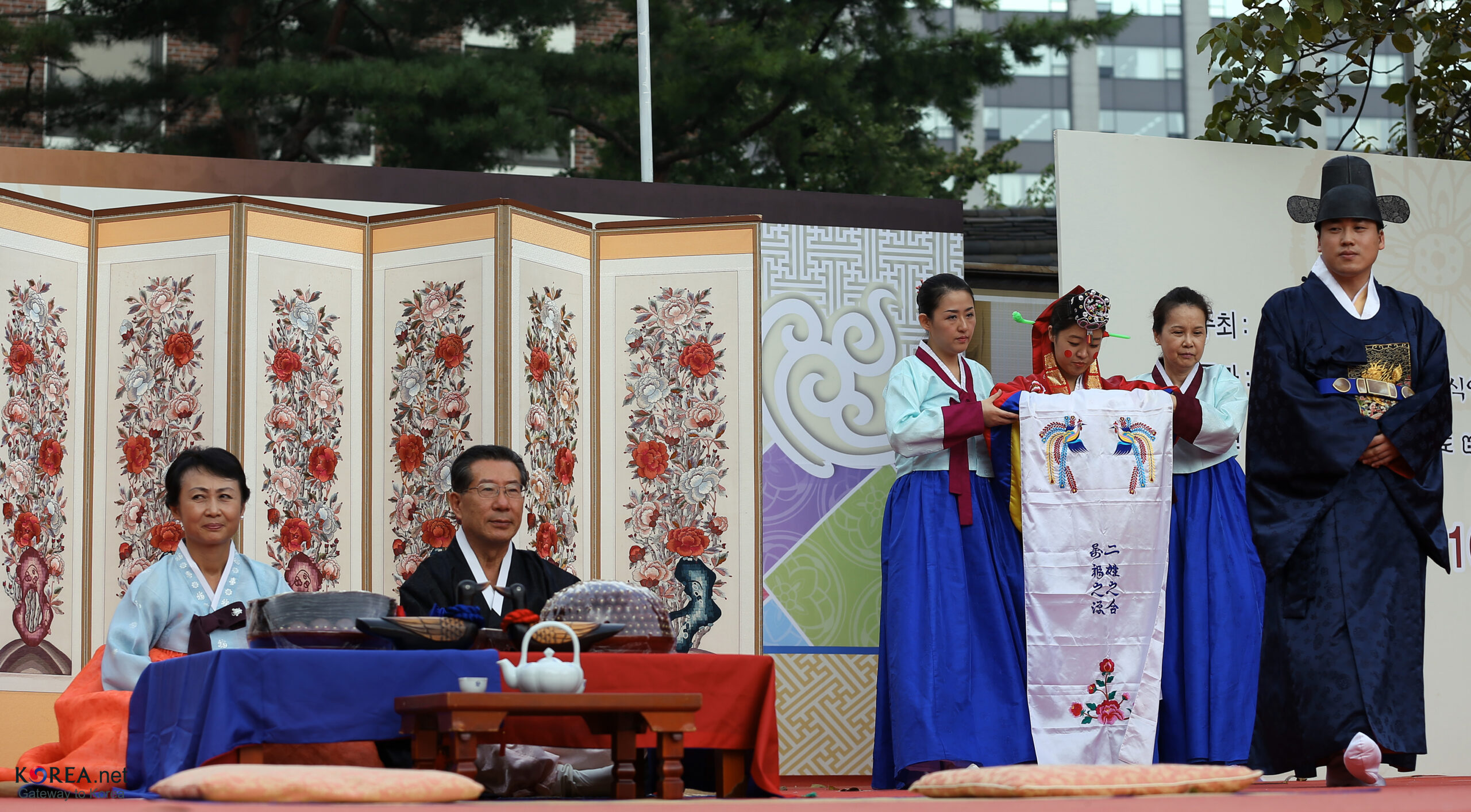
It’s called jangyu-yuseo (장유유서) — “elders and youth have a proper order” — one of the Five Relationships (Oryun) from Confucian tradition that Korea absorbed more thoroughly, and held onto longer, than most of its neighbors. The core idea is almost embarrassingly simple: social position, decided mainly by age and status, determines who defers to whom in nearly every interaction.
This isn’t background trivia to skim past. It’s the operating system everything else runs on. Bowing depth, who pours whose drink, how you address a coworker three years older than you, whether you’re allowed to use someone’s first name — all of it is jangyu-yuseo showing up in a new costume. Foreigners who memorize these as isolated “customs” get blindsided every time they meet a scenario the guidebook didn’t cover. Foreigners who grasp the logic underneath can walk into a totally new situation — a funeral, a company dinner, a in-law’s birthday — and improvise the right move without being told.

How does this principle show up at the dinner table?
Why do Koreans use two hands to give or receive things?
Watch a business card, cash, or a drink change hands between people of different ages or ranks in Korea, and you’ll almost always see the two-hand rule in action: both hands on the object, or one hand giving while the other lightly rests against that forearm. This is jangyu-yuseo made physical — a small, visible admission of “I know you outrank me here.” Skip it and nothing collapses, but do it correctly with an older business contact or your partner’s father, and it registers more than any polite phrase you could have said instead.
Why can’t I pour my own drink?
At a shared table, you pour for others, and you let others — especially anyone older — pour for you. Filling your own glass reads as a quiet announcement that you don’t need anyone’s attention, which undercuts the whole point of sitting down together. When an elder pours you a shot, the polite move is to turn your head slightly away as you drink it, not to knock it back facing them head-on. It looks like a throwaway gesture; it’s the same hierarchy principle, just expressed through where your face happens to point.
Why does the chopstick-and-spoon split matter?
Rice and soup get the spoon; chopsticks handle the banchan and anything solid. Mixing that up isn’t offensive — it just marks you as new to the table. What actually matters: never leave chopsticks standing upright in a bowl of rice. Visually, it echoes incense sticks planted at a memorial rite (jesa), so at a dinner table it lands like an accidental reference to death. Also skip lifting the rice bowl to your mouth to eat from it — normal in Japan and China, but read as poor form in Korea, where bowls stay on the table.

Where do well-meaning foreigners get tripped up?
Should I take my shoes off?
Yes — in homes, in most guesthouses and hanok stays, in every Buddhist temple, and in a fair number of traditional restaurants with floor seating. The giveaway is physical: if the floor is raised even slightly and there’s a shoe cubby or shelf by the entrance, shoes come off there. Get it wrong once and a host will usually just laugh and point at your feet — an easy mistake to avoid by simply glancing at the entryway before you step in.
Why is asking my age normal here?
Because the Korean language itself is built around hierarchy. There’s a full honorific register, jondaemal (존댓말), used with strangers, elders, and anyone even a year or two older than you, and a casual register, banmal (반말), reserved for close peers or for a senior speaking down to a junior. You genuinely cannot conjugate a sentence correctly to someone you’ve just met without knowing roughly where they sit in that order — which is exactly why Koreans ask age, or birth year, within the first few exchanges. It’s not nosiness. It’s closer to a grammar requirement, the same way French speakers need to settle on tu or vous before a conversation goes anywhere.
Should I tip?
No. Tipping simply isn’t part of Korean service culture — not at restaurants, not in taxis, not at hotel front desks. Leaving cash on the table doesn’t read as generous; more often it just puzzles the staff, who may jog after you down the street to hand it back. Where a service charge exists, it’s already folded into upscale hotel or catering bills, not offered up separately as a personal thank-you.
Can I call my Korean coworker by their first name?
Not casually, and definitely not on your own initiative. Korean names run surname-first — in “Kim Min-jun,” Kim is the surname — but the real issue is that a bare first name with no honorific attached sounds oddly blunt to Korean ears, roughly like calling your new boss by a nickname on your first day. Safer defaults: surname plus title (Kim bujang-nim for a department head), the general -nim honorific, or a relational title like sunbae (senior) if you’re on the same school or company track.

When should I read hesitation as “no”?
Korean communication tends to favor group harmony over blunt individual opinion, a habit closely tied to nunchi (눈치) — reading a room without being told what’s in it. Outright refusal gets avoided in favor of soft deflection: “that’s a bit awkward/difficult” (좀 곤란해요) is usually a no, just phrased so nobody has to actually say the word. Anyone doing business here for the first time, or asking a favor of a Korean friend or future in-law, should treat hesitation, vague timelines, or a repeated “I’ll think about it” as a polite decline. Pushing for a straight yes-or-no answer tends to create more discomfort than it resolves — which is itself a small violation of the exact harmony everyone around you is quietly trying to protect.
That same instinct governs public space. The famously silent subway cars, the low tolerance for loud phone calls, the wince at someone eating pungent food on a train — none of that comes from a rule posted on a wall. It’s the same nunchi logic at street level: don’t let your presence become a burden on the group around you.
Bowing vs. handshake: which one, and how deep?
In business and other formal settings, a short head-nod bow — somewhere around 15 to 30 degrees — usually accompanies a handshake; you do both together, not one instead of the other. Save a deeper bow, closer to the 45-to-90-degree range, for genuinely formal moments: greeting elders on a holiday, an ancestral rite (jesa), or a sincere apology. Visitors sometimes overcorrect and offer a deep, formal bow to a barista or a same-age acquaintance — it’s not offensive, just noticeably too much for the moment, roughly the social equivalent of curtsying to a cashier.
Casual expat life vs. formal Korean settings: which rules actually apply?
Worth knowing before you assume every rule applies everywhere it possibly could: among close friends of a similar age, foreigners included, banmal, no bowing, no two-hand formality, and plenty of self-poured drinks are completely normal. Koreans relax jangyu-yuseo hard once real closeness and equal footing are established — that’s half the appeal of finally being “in” with a friend group here. The formal version of every rule above switches on specifically around hierarchy and unfamiliarity: new coworkers, a partner’s parents, a landlord, a stranger who’s obviously older, a business contact you’ve just met. Misjudging which mode you’re in — treating a first dinner with someone’s parents like a night out with your language-exchange buddy — is the actual mistake people make, far more often than fumbling a single bow or gesture.
자주 묻는 질문 (FAQ)
What is the literal word for “principle” in Korean?
The standard translation is 원칙 (won-chik) for a rule or principle, 도리 (dori) for moral duty, and 예의 (yeui) when specifically talking about manners or etiquette. Context determines which one a Korean speaker would actually use.
What is the single most important cultural principle to know before visiting Korea?
Jangyu-yuseo, the Confucian principle that age and status determine who defers to whom. It underlies almost every specific rule — bowing depth, two-hand gestures, honorific speech, and drinking etiquette all flow from it.
Is it rude to ask a Korean person’s age soon after meeting them?
No — it’s expected. Korean grammar requires choosing between honorific (jondaemal) and casual (banmal) speech, so knowing relative age is necessary to speak correctly, not just polite curiosity.
Do I need to tip in Korean restaurants or taxis?
No. Tipping isn’t part of Korean service culture, and leaving extra cash often just confuses staff rather than pleasing them. Any service charge at upscale venues is already built into the bill.
What’s the biggest etiquette mistake foreigners make at a Korean meal?
Leaving chopsticks standing upright in a rice bowl, since it visually resembles incense at a memorial rite. A close second is self-pouring your own drink at a group table instead of pouring for others and letting elders pour for you.