Most articles about Korean historical drama are just ranked lists of titles — ‘Top 10 Sageuk to Watch’ — with zero explanation of why one show feels like a costumed soap opera and another feels like a history lecture with better lighting. That distinction actually has a name in Korean TV (jeong-tong sageuk vs fusion sageuk), and knowing it before you press play will save you from picking the wrong show for your mood — nothing worse than settling in for palace romance and getting three hours of court memorial readings instead. It also turns out the palace on your screen isn’t a generic backdrop — it’s a real, specific building in Seoul you can walk into this weekend, sometimes for free.
What Is a Sageuk, Exactly — and Why Does the Word Matter?
Sageuk (사극) is simply the Korean word for historical drama, but Koreans themselves split it into two camps that behave nothing like each other on screen:
- Jeong-tong sageuk (정통사극) — ‘orthodox’ historical drama. These stick close to recorded dynastic history, often trace a real king or a documented court event more or less in order, and lean on formal, almost stilted dialogue because writers are drawing straight from actual court records. Shows built around King Sejong’s reign or the founding of the Joseon dynasty tend to fall here: think slow-burn factional politics, long council scenes, and a lot of kneeling before a throne.
- Fusion sageuk (퓨전사극) — historical setting, modern liberties. The costumes and the dynasty are real, but the plot, the romance, or even the entire premise (a zombie outbreak, a body-swapped monarch, a crown prince who’s secretly a woman) is invented. This is the category that produces the shows most Western audiences actually binge and recommend to friends.
If you search ‘Korean historical drama’ expecting one genre, you’ll end up disappointed either way — you’ll get a slow palace procedural when you wanted romance and swordplay, or a soapy fantasy when you wanted something that feels like real Joseon-dynasty history. Decide which mode you’re in first, the same way you’d decide between a courtroom drama and a legal thriller before hitting play.
Orthodox vs Fusion Sageuk: Which One Actually Matches What You Want?
Here’s the trade-off in plain terms:
- Pick orthodox sageuk if you want something closer to a history documentary with prestige-drama production value — court intrigue, real kings and queens, and dialogue that sounds like it was translated from a royal record, because a lot of it basically was. Series centered on figures like King Sejong or the founding generals of Joseon reward patience, and they often run for far more episodes than a typical Western limited series, so pace your expectations accordingly.
- Pick fusion sageuk if you want the mode most first-timers actually enjoy — royal politics dressed up with romance, action, or genre-bending twists, like the zombie-plague palace siege in Kingdom, or a female crown prince living in disguise in The King’s Affection. Fusion sageuk is where Hallyu exports its historical dramas internationally, because the pacing and emotional stakes are built for viewers who don’t already know how the dynasty ends.
A useful gut-check: if a drama’s marketing leads with a real king’s name and a somber trailer, expect orthodox. If it leads with a love triangle, a murder mystery, or a supernatural hook set ‘against the backdrop of’ a dynasty, that’s fusion — and that’s perfectly fine. Neither mode is ‘more legitimate’; they’re just different contracts with the viewer.

Are Korean Historical Dramas Actually Historically Accurate?
This is the question every new viewer asks, and the honest answer is: it depends entirely on which sageuk you picked, and even the ‘accurate’ shows compress timelines, invent minor characters, and soften brutal court punishments for pacing. A few rules of thumb:
- Real kings, invented subplots — even orthodox sageuk about documented monarchs will invent a rival concubine, a fictional advisor, or a romance historians have zero record of. The throne room is real; half the people arguing in it usually aren’t.
- Costumes and titles are usually more careful than the plot. Production teams tend to research court hierarchy, hanbok color rules, and formal modes of address more rigorously than they research the actual events, because costume and etiquette mistakes get called out almost instantly by Korean viewers who grew up studying this exact material in school.
- Fusion sageuk isn’t trying to be accurate at all — treat the dynasty as a costume and a setting, not a syllabus. If real history is what you’re after, that’s what a museum or a guided palace tour is for, not a drama with a zombie subplot.
If historical accuracy genuinely matters to you, check whether a show is billed as based on a specific documented reign — King Sejong, King Yeongjo, Empress Myeongseong — versus a fictionalized dynasty with an invented royal lineage. Writers increasingly choose the latter specifically to buy themselves creative freedom, and it’s usually stated plainly in the show’s premise.
Which Korean Historical Drama Should You Actually Start With?
Instead of a ranked list, use this decision path:
- You want palace politics with a slow, prestige-drama feel → look for an orthodox sageuk centered on a well-known Joseon king, in the vein of dramas built around King Sejong’s reign or the dynasty’s founding generals. These reward viewers who like court titles, factional scheming, and long game.
- You want romance first, history second → fusion sageuk built around a crown prince or princess in disguise, or a commoner pulled into palace life — the kind of setup you’ll find in shows like The King’s Affection — is the sub-genre built exactly for this.
- You want genre mash-ups (horror, mystery, fantasy) → this is where sageuk gets exported hardest internationally. Kingdom‘s zombie-outbreak-in-a-Joseon-palace premise is the obvious entry point, but there’s a whole shelf of secret societies and fantasy kingdoms loosely modeled on Korean dynasties rather than naming a real one.
- You want something that also teaches you real court customs → look for shows explicitly built around a documented profession — a court physician, a royal calligrapher, a female court historian. These tend to blend real institutional detail (how apprenticeships worked, how court exams functioned) with a more personal, episodic plot, which makes the history go down easier.
One sequencing tip nobody mentions: watch a fusion sageuk first if you’re brand new to the genre. Orthodox sageuk assumes you already know the rough outline of Joseon dynastic history — who succeeded whom, which factions hated which — and if you don’t, entire episodes of court debate will feel like background noise instead of tension.
Where Are These Dramas Actually Filmed — and Can You Visit?
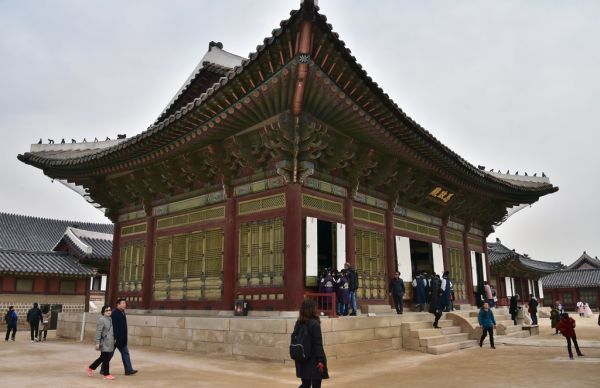
Here’s what most ‘watch these sageuk’ lists never mention: the palace you keep seeing on screen isn’t a studio backdrop. It’s Gyeongbokgung Palace in Jongno-gu, Seoul (Gyeongbokgung Station on Line 3, Exit 5), the main royal palace of the Joseon dynasty and the single most-used real-world location for sageuk production — that stone courtyard where a king delivers a decree in half the historical dramas ever made is a place you can physically stand in. Standard admission is a few thousand won, roughly the price of a coffee — but here’s the part that actually matters for drama fans: if you wear a hanbok inside the palace grounds, entry is free. Since hanbok rental shops cluster right around Gyeongbokgung and nearby Bukchon Hanok Village, with a few hours’ rental typically running somewhere in the range of 15,000–30,000 KRW (roughly $11–$22), it’s genuinely cheaper — and far more fun for photos — to rent a hanbok and skip the ticket line than to pay admission in regular clothes. Reservations usually aren’t necessary except on busy weekends or during cherry blossom season, when the whole neighborhood books up fast and every hanbok shop within walking distance sells out by mid-morning.
Gyeongbokgung vs the Korean Folk Village: Which Location Fits Your Drama Fix?
If you want to go deeper than a palace selfie, there’s a real trade-off between two places drama fans gravitate toward:
- Gyeongbokgung Palace (central Seoul) wins if what you love is the royal court setting — throne halls, palace gates, the kind of grand courtyard where a king delivers a decree in half the sageuk ever made. It’s subway-accessible, so you can fit it into a half-day itinerary alongside Bukchon Hanok Village or Insadong, and the free hanbok-entry rule makes it the obvious first stop for anyone chasing that court-drama look.
- Korean Folk Village in Yongin, Gyeonggi-do wins if what you actually love about sageuk is the market scenes, the commoner households, and the village life happening just outside the palace walls — the noodle stalls, the blacksmith’s shop, the alleyways where side characters scheme. It’s a recreated traditional village rather than a preserved royal site, sits further from Seoul, and is better suited to a half-day or full-day trip than a quick detour, especially if you want to catch one of its seasonal performances.
Drama fans chasing ‘the palace’ should go to Gyeongbokgung. Drama fans chasing ‘the village where the female lead sells rice cakes to fund her secret rebellion’ should make the trip out to Yongin.
What Should First-Time Viewers Watch Out For?
- Episode count fatigue — orthodox sageuk in particular can run well past 50 episodes, sometimes considerably more; check the total count before committing, not just the premise, or you’ll be three weeks in and still on episode 12.
- Title confusion — many sageuk share near-identical English titles once localized, especially anything involving ‘the crown prince’ or ‘the palace.’ Cross-check the original Korean title if you’re trying to track down a specific recommendation online.
- Streaming platform gaps — availability shifts between regions and platforms more often for older sageuk than for current releases, so a title praised in a years-old forum post may have moved to a different service than the one you’d expect.
- Subtitled formal speech — the archaic, highly formal court dialogue in orthodox sageuk doesn’t always translate smoothly into English; don’t assume a clunky subtitle means the original writing was clunky too.
자주 묻는 질문 (FAQ)
What does ‘sageuk’ mean, and is it the same as saying ‘Korean historical drama’?
Yes — sageuk is simply the Korean term for historical drama. Koreans further split it into ‘orthodox’ sageuk, which sticks close to documented dynastic history, and ‘fusion’ sageuk, which borrows a historical setting for an invented plot. Most internationally popular titles, from zombie-outbreak palace dramas to gender-swapped royal romances, are fusion sageuk.
Are Korean historical dramas based on real kings and queens?
Some are — orthodox sageuk often center on a documented Joseon monarch, like King Sejong — while fusion sageuk frequently invents a fictional dynasty, king, or lineage specifically to avoid being tied to real events. Across both types, costumes and court etiquette are usually researched more carefully than the plot itself.
Which Korean historical drama should a beginner start with?
Start with a fusion sageuk rather than an orthodox one. Fusion sageuk doesn’t assume prior knowledge of Joseon dynastic history, while orthodox sageuk can feel slow or confusing without that background — you’ll get more out of the court intrigue once you already know the outline of who’s fighting whom.
Can you visit the real locations shown in Korean historical dramas?
Yes. Gyeongbokgung Palace in central Seoul, reachable via Gyeongbokgung Station on Line 3, is the most frequently used real palace location and offers free entry if you’re wearing a hanbok. The Korean Folk Village in Yongin is a recreated traditional village often used for market and commoner scenes rather than court scenes.
Is it worth renting a hanbok just to visit a palace from a drama?
For Gyeongbokgung specifically, yes — hanbok rental near the palace typically costs somewhere around 15,000–30,000 KRW for a few hours, and wearing one gets you free entry, which usually works out cheaper than paying admission in regular clothes and makes for far better photos.