Short answer: Korean stands apart because three things collide at once — grammar with no proven family ties to its neighbors, an alphabet that was designed on paper rather than evolved over centuries, and a speech-level system so detailed it can change a single verb ending depending on whether you’re talking to your best friend or your grandmother. None of that is textbook trivia. It’s the kind of thing you notice the first time a Korean coworker switches tone mid-sentence, or a shopkeeper’s face shifts the moment they find out you’re a few years older than they guessed. Here’s where each of those quirks actually shows up in real conversation.

Why is Korean considered unique among world languages?
Linguists file Korean under language isolate — or, in some classifications, the lone survivor of a tiny Koreanic family with no confirmed relatives. That already puts it in rare company. Japanese looks like a cousin at first glance — same subject-object-verb order, a similar particle system for marking grammatical roles — but the core vocabulary doesn’t match up, and no one has managed to prove a genetic link between the two. Chinese, meanwhile, poured centuries of loanwords into Korean (roughly half of the modern vocabulary traces back to Chinese characters), yet Korean grammar never bent toward Chinese structure at all. It borrowed the furniture, so to speak, but kept its own floor plan.
Stack those facts up and you get a language that:
- Shares no family tree with Chinese, Japanese, or any European language
- Writes itself in an alphabet invented on a deadline, not one that evolved from pictographs or borrowed scripts over centuries
- Grammaticalized social rank into its verb system, in a way most languages leave to tone of voice or word choice
Any one of these would make a language mildly unusual. Having all three together is what makes linguists point to Korean as a genuine outlier — not just “another Asian language,” a label it gets stuck with far too often by people who’ve never looked past the surface.
Is Hangul really that different from other writing systems?
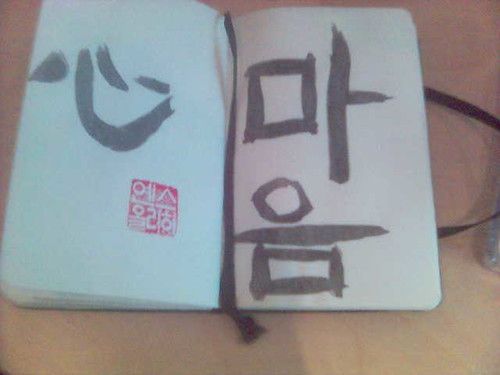
Yes — and the backstory explains why. Most alphabets in use today crawled into existence over hundreds of years through borrowing and drift: Latin descended from Greek, which descended from Phoenician, each generation reshaping the letters a little. Hangul skipped that entire process. It was commissioned in the 1440s under King Sejong, built by a small group of scholars working to a specific brief: give ordinary Koreans, who couldn’t read the thousands of Chinese characters used by the educated elite, a way to become literate within days rather than years.
The clever part isn’t just that it was designed on purpose — it’s how it was designed. The consonant shapes were drawn to mimic the actual position of your tongue, teeth, and throat when you produce that sound. Say “ㄱ” (g/k) slowly in front of a mirror and watch the back of your tongue rise toward your throat — the letter is basically a sketch of that motion. Say “ㄴ” (n) and your tongue taps just behind your teeth, which is roughly what the shape traces too. No other major writing system still in daily use was built with that kind of phonetic logic baked directly into the letterforms — it’s less an alphabet and more a diagram of your own mouth.
Why does Korean have so many levels of speech formality?
This is usually what catches learners off guard hardest, and it’s probably the single biggest reason people call Korean unique rather than just difficult. English handles formality with word choice — “could you possibly” instead of “gimme” — but the sentence structure stays identical either way. In Korean, the grammar itself shifts.
Take something as ordinary as telling someone to eat. Say it to a close friend and it’s a blunt meogeo. Say it to a coworker or someone you’ve just met and it becomes the polite deuseyo. Say it to your grandmother and the whole sentence changes shape — the verb swaps to an honorific form, and even the word for “meal” changes from the plain bap to the respectful jinji. Same instruction, three structurally different sentences, and using the wrong one isn’t a style choice — it’s a signal about how you see the person you’re talking to.
English speakers manage this socially; Korean bakes it into the verb ending itself, tied to the listener’s age, rank, and how well you know them. Get it wrong in a job interview or in front of your partner’s parents, and it reads as genuinely presumptuous — not a charming accent, a real misstep — even if your pronunciation is flawless.
Practical tip for visitors: if you’re picking up a handful of phrases for a trip, default to the polite “-yo” ending (gamsahamnida, juseyo) with anyone you don’t already know well — shop staff, strangers, people who look older than you. Overshooting into formality rarely lands badly. Undershooting it does.
What makes Korean grammar structurally different from English?
Set the honorifics aside for a moment and a few other habits still trip up nearly every English speaker who tries this language seriously:
- The verb comes last, always. Korean runs subject-object-verb, so the natural order is closer to “I coffee drink” than “I drink coffee.” In real conversation this means you often can’t tell what someone’s actually saying — agreeing, refusing, asking — until the very last syllable lands.
- Subjects vanish constantly. If it’s obvious from context who’s being talked about, Korean speakers simply leave it out. Entire exchanges happen without a single spoken “I” or “you,” which feels disorienting to English ears trained to name the subject every single time.
- Particles carry the weight that word order carries in English. Tiny syllables tacked onto nouns — roughly “-eun/-neun” or “-i/-ga” — mark whether something is the subject, object, or topic of the sentence. Because the particle does that job, word order can shuffle around far more loosely than English ever allows.
- Counting words change depending on what’s being counted. You don’t just say “three” — you use a different counter for people, animals, flat objects, or cups of coffee, the way English says “a herd of cattle” but never “a herd of cars.” Korean applies that logic almost everywhere numbers show up.
None of these is unheard of on its own — Japanese and Spanish drop subjects too, Chinese has its own classifier words. What’s rare is having all of it stacked on top of the honorific system at the same time, which is why Korean grammar tends to feel like its own puzzle rather than a variation on something you’ve already met.
Are there Korean words and concepts that don’t translate well?
Yes, and this is exactly where language and culture stop being separable. A few that come up constantly:
- 정 (jeong) — a kind of emotional residue that builds up between people over shared time, even through arguments and friction, not despite them. It’s not quite “love,” not quite “loyalty,” not quite “familiarity” — closer to all three blended together. Ask a Korean to define it precisely and you’ll usually get a pause, then “you just have to feel it.”
- 한 (han) — a collective, almost generational ache tied to Korea’s history of hardship and loss. Scholars still debate exactly how to pin it down, and that ongoing disagreement is itself a decent clue to how untranslatable the word actually is.
- 눈치 (nunchi) — the skill of reading a room fast: picking up on what’s unsaid, sensing when to stay quiet, knowing when the mood in a conversation has shifted. English has “tact” or “social awareness,” but nunchi gets talked about as a measurable trait — people are described as having “quick nunchi” or “no nunchi” the same casual way you’d call someone tone-deaf or a natural at reading people.
Words like these exist because the concepts sit at the center of how social life actually runs in Korea, so the language grew dedicated vocabulary for them — much like English has an oddly large stockpile of precise words for coffee (pour-over, cold brew, flat white) because that’s a culture that obsesses over the details.
How does Korean culture shape the way the language actually works?
This is the part that turns “memorize the grammar rules” into something closer to “learn how a society organizes itself.” The honorific system isn’t decorative politeness — it’s a working map of who outranks whom in any given moment, and it plays out in small, specific situations:
- Meeting someone new almost always involves an early, sometimes blunt-feeling exchange of age. It isn’t nosiness — it’s functional. Without that number, neither person knows which speech level to switch into for the rest of the conversation.
- Family terms attach to strangers. Calling an older woman at a market “auntie” (이모, imo) or an older man “older brother” (형/오빠, depending on your own gender) is completely ordinary in restaurants and shops — the language defaults to pretend-kinship with strangers rather than a neutral “sir” or “miss” the way English does.
- Workplace speech shifts by the minute. The same person might use deferential form with their manager, polite form with a same-level colleague, and a looser mix with a junior hire — sometimes all three inside one short meeting.
Compare that to English, where formality mostly lives in tone and word choice rather than grammar — a CEO and a summer intern technically build sentences the same way. A Korean CEO and intern do not; the sentence structure itself marks the gap between them. That built-in social wiring is arguably the cleanest answer to “why is Korean unique” you’ll find — the hierarchy isn’t implied by context, it’s written straight into the grammar.
What should a beginner watch out for? A quick checklist
Whether you’re seriously learning Korean or just want to use a handful of phrases respectfully on a trip, this covers the mistakes that come up most often:
- Default to polite speech (-yo endings) with anyone you don’t know well, regardless of how young or casual they seem.
- Don’t dodge the age question if you’re actually building a friendship — in Korean social norms it’s practical information, not the invasive question it might feel like back home.
- Don’t panic when pronouns disappear. If a sentence seems to be missing “I” or “you,” the meaning is almost always recoverable from context — you just have to listen for it instead of expecting it to be spoken outright.
- Learn the counting words you’ll actually use — for people, drinks, or items at a market — since mixing up classifiers is one of the most common beginner slip-ups, and locals will usually understand you anyway but you’ll hear the correction.
- Don’t chase a one-word English equivalent for jeong, han, or nunchi when you’re explaining Korean culture to friends back home — describe the situation instead; it lands better than the dictionary version ever will.

Why does this matter if you’re just visiting Korea, not studying the language?
Even travelers with zero interest in holding a full conversation in Korean get something out of understanding why the language works this way — mostly because it explains behavior that would otherwise just seem odd:
- Why a shop owner’s tone can shift abruptly the moment they realize you’re older or younger than they’d assumed
- Why new Korean friends ask your age within the first few minutes, sometimes before they ask your name
- Why apps and public signage default to stiff, almost overly formal English — they’re mirroring the formal register Korean itself uses in public-facing text
- Why “thank you” has more than one version (감사합니다 versus 고마워, for instance), and using the wrong one in the wrong room can land a little strangely even when the meaning is perfectly clear
Once you’ve got even a loose grip on the honorific logic behind it, moments that felt random or confusing start resolving into a pattern — which is a big part of what makes Korea feel readable rather than baffling after a few days on the ground.
자주 묻는 질문 (FAQ)
Is Korean the hardest language to learn for English speakers?
It’s often ranked among the more time-intensive languages for English speakers, mainly due to the honorific system and unfamiliar grammar order rather than the alphabet — Hangul itself is actually quick to learn compared to character-based writing systems.
Is Korean related to Japanese or Chinese?
Not in terms of language family — Korean is considered a language isolate with no proven close relatives. It borrowed heavily from Chinese vocabulary over the centuries and shares some grammatical patterns with Japanese, but the three are not classified as belonging to the same family.
Why does Korean have different words depending on who you’re talking to?
This comes from the honorific system, which is built directly into verb endings and vocabulary. It reflects a culture where age, social rank, and relationship closeness determine how a sentence is structured, not just how polite the tone sounds.
What is the single most unique feature of the Korean language?
Most linguists and learners point to the speech-level system (honorifics) as the most distinctive feature, since it’s grammaticalized rather than just a matter of word choice or tone, which is unusual even compared to other honorific-using languages like Japanese.
Do I need to learn Korean honorifics just to visit as a tourist?
Not in depth, but knowing that polite speech exists — and defaulting to phrases with a polite ‘-yo’ ending — will help you avoid sounding unintentionally blunt with shopkeepers, staff, or new acquaintances.