The history of the Korean Wave (Hallyu) covers roughly three decades — from cable dramas that quietly won over housewives in Beijing and Osaka in the late 1990s, to a Best Picture Oscar, a record-breaking Netflix release, and sold-out stadium tours across three continents. South Korea is a country roughly the size of Portugal, with no built-in advantage in language reach the way English or Spanish-speaking industries have. So the real question isn’t just “how did this happen,” it’s “how did it keep happening for thirty years without collapsing like most pop culture trends do.” This guide walks through the actual phases — what triggered each one, who the key players were, and why the wave kept compounding instead of burning out.

What exactly does “Korean Wave” or “Hallyu” mean?
“Hallyu” (한류) literally means “Korean flow,” and the term wasn’t Korea’s own branding — it was coined by Chinese journalists in the late 1990s, who needed a shorthand for the sudden appetite for Korean dramas and pop songs spreading through Beijing and Taipei. Korean broadcasters and, soon after, the government adopted the label themselves, and it’s stuck ever since as the catch-all for Korea’s cultural exports: dramas, music, film, gaming, webtoons, food, and skincare all fall under the same umbrella now.
What separates Hallyu from, say, anime’s slow global creep or reggaetón’s rise is how deliberate the machinery behind it has been. Japanese anime spread mostly through fan communities and grassroots licensing; Hallyu had entertainment conglomerates, cable networks, and eventually government trade offices all pulling in the same direction. It wasn’t an accident that kept working — it was closer to industrial policy applied to pop culture.
How did the Korean Wave actually start in the 1990s?
To understand why Hallyu began exactly when it did, look at what was happening inside Korea, not just who was watching from outside.
- Democratization and deregulation: Korea spent decades under authoritarian censorship that dictated hairstyles, song lyrics, and even how long TV dramas could run. As that grip loosened through the late 1980s and into the ’90s, music and fashion suddenly had room to get weirder, louder, and more marketable.
- The 1997 Asian Financial Crisis: This is the part most casual timelines skip. When the won collapsed and the IMF stepped in, Korea’s government went looking for growth industries that didn’t need decades of heavy-manufacturing investment to pay off. Content — cheap to produce relative to steel or shipbuilding, and infinitely exportable — became an official national priority almost overnight.
- Regional broadcasting deregulation: Around the same time, China, Taiwan, and Vietnam opened their airwaves to more foreign programming. Korean dramas were considerably cheaper to license than American or Japanese shows, and unlike Hollywood imports, they didn’t feel culturally foreign to East Asian viewers — similar family dynamics, similar melodrama instincts.
Musically, Seo Taiji and Boys usually get the credit for cracking things open in 1992, fusing rap and rock over dance beats in a way that had nothing to do with the trot ballads dominating Korean radio at the time. It scandalized parents and censors alike — and it set the template the idol system would later industrialize.

What was “Hallyu 1.0” and which shows kicked it off?
The first wave, roughly late 1990s through the mid-2000s, ran almost entirely on television dramas and a small handful of pop acts, and it stayed largely inside Asia rather than going worldwide.
- “Winter Sonata” turned into a genuine phenomenon in Japan, where its lead actor was mobbed at airports by fans old enough to be his grandmother — a demographic that had never watched Korean television before and suddenly couldn’t stop.
- “Jewel in the Palace” (Dae Jang Geum) traveled further than anyone expected, airing in the Middle East, parts of Africa, and Eastern Europe. It proved Korean period dramas could cross borders on story alone, with no pop-music tie-in doing the marketing for them.
- Early idol acts like H.O.T. in China and BoA in Japan showed the two main playbooks that would repeat for years: some groups broke through almost by accident, others — like BoA, who trained to debut singing in fluent Japanese — engineered the crossover deliberately from day one.
This phase was regional, and honestly kind of fragile. It leaned hard on China and Japan’s appetite for Korean content, and that appetite wasn’t guaranteed — political friction with Beijing led to informal restrictions on Korean shows and touring artists more than once. That vulnerability is exactly why the industry later pushed so aggressively into Southeast Asia, Latin America, and eventually the West: putting all the export eggs in two neighboring baskets had already backfired.
How did “Hallyu 2.0” turn K-pop into a global genre?
The second phase, roughly the 2010s, is when K-pop itself became the main engine — and the internet, not TV licensing deals, became the delivery truck.
- YouTube changed distribution completely. Groups no longer needed a local broadcaster to air anything; a single upload could go viral in a country with zero prior interest in Korean music. “Gangnam Style” is the obvious hinge point — a genuine worldwide viral moment that put K-pop on the radar of people who’d never heard the word “Hallyu” before, let alone a group name.
- The idol training system scaled up hard. SM, YG, and JYP had already been refining years-long scouting-and-training pipelines since the ’90s, but this era is when groups like EXO, BIGBANG, and Girls’ Generation converted that machinery into real international fanbases, especially across Southeast Asia and Latin America, well before Western charts took notice.
- Fandom went digital and borderless. Twitter and volunteer fan-translation communities let non-Korean-speaking fans follow comebacks in near real time — something a Winter Sonata fan in the mid-2000s simply had no equivalent for.
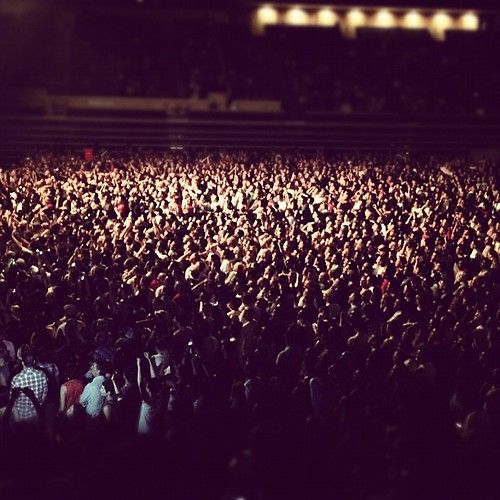
This is also when Western media stopped treating Hallyu as an Asia-only curiosity and started running actual news coverage on it — even if, at the time, it was still framed more as a novelty than as a serious industry.
What made “Hallyu 3.0” different — and truly global?
The current phase, roughly late 2010s onward, is when Korean content stopped needing a novelty angle or a translation gimmick and started competing head-on with American and European entertainment on its own terms.
- BTS built its fanbase (ARMY) mostly through direct, unfiltered social media engagement rather than traditional label promotion, and went on to chart on the Billboard Hot 100 and sell out stadiums across the U.S. and Europe — markets the industry had been trying, and largely failing, to crack for two decades.
- “Parasite” won Best Picture at the 2020 Academy Awards, the first non-English-language film ever to take the category — a milestone that had nothing to do with music or idols, and proved Hallyu’s reach extended into serious cinema, not just entertainment product.
- “Squid Game” became one of Netflix’s biggest hits worldwide after its 2021 release, showing that subtitled, Korean-language drama could dominate global streaming conversation rather than staying confined to fan circles who already sought out K-content.
- BLACKPINK became the first K-pop girl group to headline major Western festivals, pulling in mainstream pop listeners who’d never followed a K-pop act before, not just the existing fandom.
The structural shift underneath all of this is that platforms like Netflix started co-producing and licensing Korean shows directly, so a series now drops for global audiences the same day it airs in Korea — instead of arriving years later as a dubbed rerun, which was the norm back in the Winter Sonata days.
How do the three phases actually compare?
If you’re trying to keep the timeline straight, here’s a rough side-by-side:
- Hallyu 1.0 (late 1990s–mid 2000s): TV dramas leading, reach limited to East and Southeast Asia plus a few surprising outposts like the Middle East, distributed through broadcast licensing deals.
- Hallyu 2.0 (2010s): K-pop leading, reach expanding into Latin America and pockets of Europe and the U.S., distributed via YouTube and social platforms rather than TV contracts.
- Hallyu 3.0 (late 2010s–present): Multi-format — music, film, TV, gaming, webtoons all moving together — reach genuinely global and mainstream, distributed as day-one content on global streaming platforms.
The thing that actually changed across these phases isn’t quality — Korean dramas and pop songs were already well-crafted in the 1990s, just ask anyone who lived through the Seo Taiji era. What changed is that distribution finally caught up to the content, and Korea kept reinvesting in the industry instead of treating each breakout hit as a one-off fluke to coast on.
Has the Korean Wave faced pushback or setbacks?
It’s worth being honest that Hallyu’s growth hasn’t been a straight climb, and treating it as an unstoppable trend glosses over some real friction points:
- Political tensions with China have repeatedly led to informal bans on Korean content and touring artists, cutting off access to what was once one of Hallyu’s largest single markets, sometimes with little warning.
- Cultural appropriation debates surface periodically, both when Korean acts borrow aesthetics from other cultures without much context, and in reverse, when Western artists lift K-pop’s visual and choreographic style without crediting where it came from.
- Industry labor concerns — years-long trainee periods, restrictive contracts, and relentless public scrutiny of idols’ personal lives — have drawn louder criticism both inside and outside Korea in recent years. Several high-profile controversies have pushed companies toward reform, though the pace has been uneven at best.
- Saturation worries come up constantly among industry watchers, who question whether the tightly formulaic idol-training system can keep churning out globally competitive acts indefinitely, or whether audiences will eventually just get tired of the formula.
None of this has stopped the wave so far, but it’s a far more useful picture than the version where Hallyu is one unbroken, frictionless success story.
How can you actually explore Hallyu’s history yourself as a visitor or fan?
If you want to go past reading about it, here’s a practical way to trace the timeline firsthand:
- Start with a classic Hallyu 1.0 drama like Winter Sonata or Jewel in the Palace to get a feel for the tone that first won over Asian audiences — slow-burn, melodrama-heavy, a world away from the tighter pacing of modern K-dramas.
- Watch a Hallyu 2.0 music video from the early 2010s — BIGBANG, Girls’ Generation, early EXO — to hear how the idol sound evolved before the current era of global crossover collaborations.
- Visit a K-pop or Hallyu exhibit in Seoul — a few venues walk through the industry’s development with actual stage costumes, memorabilia, and multimedia displays, worth it if you want the full arc rather than the highlight reel.
- Follow a current Hallyu 3.0 release — a new Netflix Korean original or a major group’s comeback — and compare the production budget and global marketing push to what earlier eras could pull off.
- Read up on the business side, not just the content itself. Understanding how entertainment companies structure training, contracts, and export strategy explains far more about why Hallyu scaled the way it did than any single drama or song can.
Even doing two or three of these gives you a much sharper sense of the arc than just watching whatever’s trending on your feed right now.
자주 묻는 질문 (FAQ)
When did the Korean Wave officially begin?
There’s no single official start date, but most accounts point to the late 1990s, when Korean dramas began gaining traction in China and Taiwan and Chinese journalists first coined the term “Hallyu” to describe it.
Why did the Korean government get involved in promoting Hallyu?
After the 1997 Asian Financial Crisis exposed how exposed Korea’s manufacturing-heavy economy was, the government started looking for growth industries that didn’t need decades of infrastructure investment, and content exports fit that gap — so funding, trade support, and cultural promotion agencies followed.
Is K-pop the same thing as the Korean Wave?
No — K-pop is one major piece of Hallyu, but the term also covers dramas, films, variety shows, webtoons, gaming, food, and beauty products. K-pop just became the most visible export internationally, especially from the 2010s onward.
What was the first Korean cultural export to become genuinely global, not just regional?
“Gangnam Style” is usually credited as the first true global viral moment for Korean pop culture, though “Parasite” and “Squid Game” later proved Korean film and TV could dominate mainstream global attention just as effectively.
Is the Korean Wave still growing or has it peaked?
It’s still pushing into new regions and formats, but the industry is also dealing with real challenges like saturation concerns and labor practice criticism — so it’s more accurate to call it a maturing, evolving industry than a trend that’s simply unstoppable.