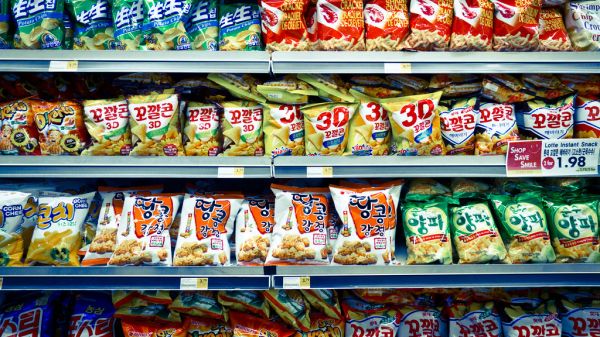
Quick summary: There’s a specific kind of paralysis that hits when you’re standing in the snack aisle at H Mart, or worse, a GS25 in Myeongdong at 1 a.m., staring at a wall of packaging you can’t read while a line forms behind you. This guide exists to get you out of that spiral. Below is a category-by-category breakdown of the snacks actually worth your basket space, how to shop even with zero Hangul, and the habits that separate a first-timer’s haul (three bags of Choco Pie, nothing else) from a genuinely good one.
What Actually Counts as a “Korean Grocery Store” Here?
Worth clarifying up front, because the answer changes what’s realistic to expect on the shelf. When people type this phrase into Google, they’re usually picturing one of three very different places:
- H Mart or a local Korean/Asian supermarket abroad — a full-size grocery store with its own snack aisle (sometimes two or three), stocked with imported packaged goods, a fresh bakery counter, and a freezer section that’s easy to overlook but shouldn’t be.
- A Korean supermarket chain in Korea itself — Emart, Homeplus, Lotte Mart. These are massive, and the snack section alone can be longer than an entire mid-size grocery store back home. Bring a cart, not a basket.
- A Korean convenience store — GS25, CU, 7-Eleven, or Emart24. Small footprint, deceptively deep selection, and usually the first place new or collaboration snacks land, sometimes weeks before they show up anywhere else.
The reassuring part: the core lineup of “must-try” snacks shows up in all three, just with different depth and pricing. So this guide holds up whether you’re browsing Koreatown in LA or standing in a CU in Hongdae debating a 2 a.m. purchase.
What Are the Best Korean Grocery Store Snacks to Try First?
Skip the random grab-bag approach. Thinking in categories — savory, sweet, dried, drinkable — makes more sense, because most people leave happier with one of each than with ten bags of the same chip they already know they like.
Which savory chips and crackers are worth grabbing?
- Honey Butter Chip (Haitai) — the chip that kicked off Korea’s sweet-savory obsession years back and, somewhat surprisingly, was famous for selling out nationwide when it first launched, though shortages are far less common today. A safe first pick if you like a potato chip with a little sugar on it.
- Ojingeo (squid) flavored rings and chips — Several Korean brands make versions, and they read a lot less “seafood” than the name implies. Closer to a savory, umami-forward cracker than anything fishy or chewy.
- Shrimp crackers (Saeukkang) — a Nongshim staple that’s been on shelves for decades. Light and airy rather than greasy, more like a puffed shrimp chip than anything heavy.
- Yukgaejang or Buldak flavored ramen-style snack chips — for people who love the flavor of spicy instant noodles but don’t necessarily want to eat a full bowl standing at a convenience store counter.
- Gim (seasoned seaweed snacks) — individually wrapped, salty, paper-thin, and shatteringly crisp. Packs flat in a suitcase without crushing, and it’s the easiest way to convert someone who’s only ever known seaweed as a sushi wrapper.
Which sweet snacks should you actually buy?
- Choco Pie (Orion) — the obvious pick, yes, but there’s a reason it’s practically a category unto itself across Asia, not a niche Korean thing.
- Homerun Ball — a soft cake ball with a molten-ish cream center, usually chocolate or banana. Think of it as Choco Pie’s richer, messier cousin.
- Custas — custard-cream cake, noticeably softer and less sweet than the Twinkie-adjacent snacks it sometimes gets compared to.
- Ppeongtwigi (puffed rice crackers) — light, crackly, barely sweet. The thing to reach for when you want something after a big Korean meal but don’t want more sugar.
- Yeot gangjeong (nut and puffed-grain brittle) — an old-school snack that’s had a bit of a modern-packaging revival. Good middle ground if you want dessert-adjacent without the sugar crash.
What about drinks and dairy-style snacks?
- Binggrae Banana Milk — probably the single most photographed item in Korean snack culture, and the yellow bottle earns the hype. Mild, creamy, not cloying.
- Sikhye (sweet rice punch) — canned, faintly sweet, with actual soft rice grains floating in it. The texture throws some Western palates off the first time; try a small can before committing to a case.
- Milkis or Sac Sac (fruit juice with real pulp bits) — a fizzy, textured alternative if you’re bored of Coke and Sprite and want something that feels a little more like drinking a smoothie with carbonation.

Convenience Store, Supermarket, or H Mart — Where Should You Actually Shop?
If you’re deciding where to spend limited time (or suitcase weight), here’s how each option actually functions in practice:
- Convenience stores (GS25, CU, 7-Eleven): Best for testing new or limited-edition snacks before committing to a full bag, and for single-serving grab-and-go. You’ll pay a bit of a premium per item compared to a supermarket — you’re buying convenience and novelty, not bulk value.
- Large supermarkets (Emart, Homeplus, Lotte Mart) in Korea: Best for stocking up before flying home, comparing three or four competing brands side by side on the same shelf, and hitting better per-unit pricing on multi-packs. This is where most travelers do the real “snack haul” shopping, usually the day before their flight.
- H Mart or Korean supermarkets abroad: Best if a Korea trip isn’t in the cards but you want the actual product rather than a watered-down “Korean-inspired” version from a regular chain grocery store. Selection runs smaller than in Korea, but it’s more curated than most people expect walking in, and it’s typically the only reliable spot outside Korea for fresh bakery items and refrigerated snacks.
Something that catches a lot of visitors off guard: the exact same bag of chips can cost noticeably different amounts depending on whether you grab it at a convenience store, a supermarket, or an airport shop on the way out. If your haul is more than a handful of items, it’s almost always worth holding off for a supermarket run instead of loading up at the convenience store outside your hotel.
How Do You Choose Snacks If You Can’t Read Korean?
This is where most first-time shoppers freeze up, so here’s a checklist that actually works standing in the aisle:
- Look for a small English sticker or tag. Bigger Korean supermarkets and H Marts often add a translated label under the shelf price for popular items — check the price tag itself, since the packaging rarely has English on it.
- Use your phone’s camera translation feature. Google Translate’s camera mode works in a pinch, but Naver Papago tends to handle Korean text and food terms more accurately if you download it beforehand.
- Check the picture, not just the words. Korean snack packaging is usually very literal — a shrimp illustration means shrimp flavor, a red pepper icon means spicy. Trust the imagery more than you’d think to.
- Look for familiar brand logos first. Nongshim, Orion, Lotte, Haitai, and Ottogi make up most of what you’ll see on Korean snack shelves. Recognizing these five logos alone will get you moving faster even with zero Korean reading ability.
- Ask a staff member to point you toward the “best-seller” shelf. Most Korean supermarkets cluster popular new releases near the front of the snack aisle — the fastest shortcut if you’re short on time or patience.

What Mistakes Do First-Time Shoppers Usually Make?
A handful of patterns come up over and over with people on their first Korean snack run:
- Buying only the internationally famous items. Choco Pie and Buldak noodles are genuinely good, but they’re also stocked at plenty of grocery stores outside Korea by now. Put some of your budget toward things that don’t travel as far, like fresh rice cakes or regional specialty snacks you won’t find at home.
- Ignoring the refrigerated and semi-fresh section. Some of the best items — fresh Korean bakery bread, chilled rice cake desserts, fresh-made kimbap-style snacks — never touch the dry snack aisle at all, so it’s easy to walk right past them.
- Overpacking spicy snacks without testing spice tolerance first. Korean spice labeling isn’t always predictable; a snack marked mild can still catch you off guard. Try one before buying a stack for gifts.
- Assuming convenience store prices reflect true value. As mentioned above, the same bag of chips can run noticeably cheaper at a large supermarket than at a 24-hour store near a tourist-heavy block.
- Not checking expiration dates on imported stock. Mostly an H Mart or overseas-supermarket issue — shipping time and shelf time add up, so a quick glance is worth it, especially with dairy-based snacks like banana milk.
None of these will ruin a trip, but sidestepping them tends to get you a much better mix of snacks for the same money and the same suitcase space.
How Should You Build a Balanced Snack Haul?
If space or budget is limited, aim for variety across texture and flavor rather than stocking up on one favorite. A haul that actually holds up looks something like:
- One or two savory chip-style snacks
- One chocolate or cream-filled sweet snack
- One seaweed or dried savory snack that packs flat and survives a suitcase
- One drinkable item like banana milk, if you’re drinking it on the spot rather than trying to ship it home
- One spicy snack for anyone chasing that Buldak-style kick
This spread tends to satisfy most people at the table and gives you something to compare against snacks you already know from other Asian grocery stores, instead of coming home with ten variations of the same chip.
자주 묻는 질문 (FAQ)
What are the most popular Korean grocery store snacks for beginners?
Honey Butter Chip, Choco Pie, Homerun Ball, shrimp crackers (Saeukkang), and Binggrae Banana Milk are the usual safe starting points — widely liked, easy to find in any of the three store types, and not too spicy or unfamiliar for a first try.
Are Korean grocery store snacks very spicy?
Not across the board. Plenty of options — banana milk, seaweed sheets, shrimp crackers, sweet rice cakes — have no spice at all. Spicy items do exist and are usually flagged with a red pepper icon on the packaging, so check that or ask staff if you’re spice-sensitive.
Can I find the same Korean snacks at H Mart as in Korea?
Mostly yes for shelf-stable items like chips, ramen, and packaged sweets. Fresh bakery goods, chilled rice cakes, and some newly released limited-edition snacks are harder to track down outside Korea and are best bought in person during a trip.
Is it cheaper to buy Korean snacks at a convenience store or a supermarket?
Supermarkets like Emart or Homeplus generally offer better value, especially on multi-packs, while convenience stores charge a bit more for the convenience of grab-and-go single items and first access to limited-edition releases.
How do I know if a Korean snack is good if I can’t read the packaging?
Use your phone’s camera translation app (Papago tends to be more accurate than Google Translate for Korean), look for recognizable brand logos like Nongshim, Orion, Lotte, Haitai, and Ottogi, and trust the product imagery — Korean snack packaging tends to show the actual flavor fairly literally.