Call banchan a “side dish” and you’ve already misread the table in front of you. In English, a side dish is optional—fries you could skip, garlic bread you could wave off. Banchan doesn’t work that way in Korean dining, and treating it like a Western side leads to the same handful of mistakes over and over: ordering too much because you think each plate is a course, reaching into a shared dish with chopsticks you just licked, assuming the vegetable-looking plate is vegetarian, or sitting there too polite to ask for a refill that’s already built into the price of the meal. This piece isn’t another list of what’s on the plate—it’s about what the word, and the habit behind it, actually signal.
What does “Korean side dishes” actually mean, beyond the dictionary definition?
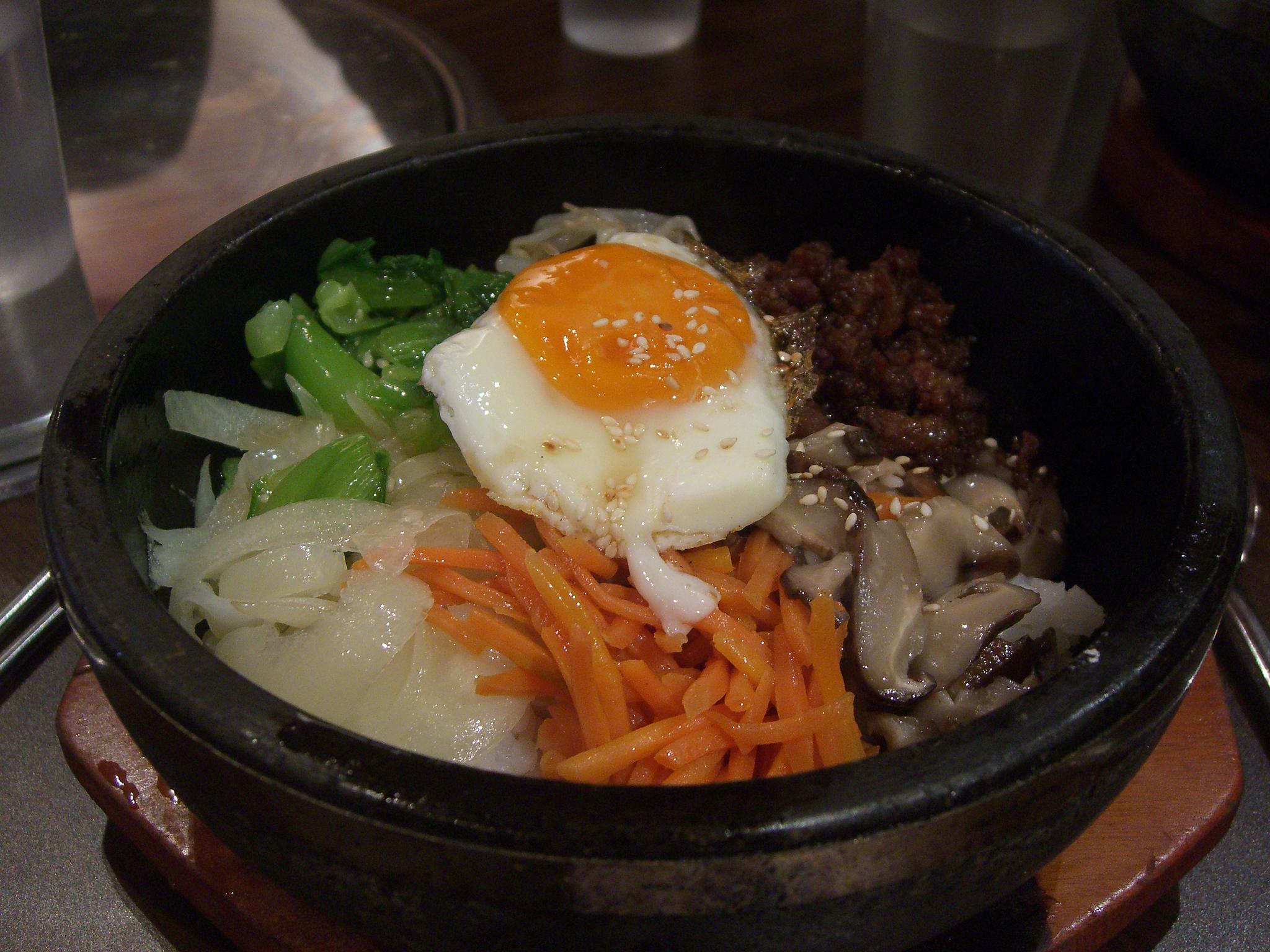
Banchan (반찬) are the small shared dishes that come with rice and soup or stew as one connected meal—not extras stacked on top of a main course. A Korean meal is built as a set: bap (rice), guk or jjigae (soup or stew), and banchan around them. Take the banchan away and you haven’t simplified the meal, you’ve broken it. That’s the piece “side dish” can’t carry: banchan aren’t garnish for flavor, they’re load-bearing. Even a solo bowl of soup at a nearly empty restaurant will arrive with two or three of them, because a table without banchan isn’t considered finished.
That’s also why the count swings so wildly from place to place. A quick lunch spot might set down three or four plates next to your soup. A restaurant leaning into tradition might bring out seven, nine, or more. Neither version is “more Korean”—the meaning was never in the number. It’s in the arrangement: rice and soup sit at the center, and banchan are the shared structure holding the meal together, whether you’re eating alone or with six other people passing the same dish of kongnamul back and forth.
Why doesn’t “side dish” translate the real meaning of banchan?
Three specific mismatches trip up almost every first-time visitor:
- They’re not a course. Western meals move in sequence—appetizer, then main, then side. Banchan land on the table all at once with the main dish and stay there for the whole meal. There’s no “finish this before the rice comes” moment; you’re meant to circle back to the same plate of danmuji three bites into your bibimbap and again at the end.
- They’re not individually plated. One plate of spinach namul is for the whole table, the same way your grandmother’s holiday dinner has one bowl of mashed potatoes for everyone, not one each. Asking a server for “my own” banchan the way you’d order a personal side salad signals that you’ve misread the format, not that you’re being polite by not sharing.
- They’re not upsells. A restaurant charging extra for a second basket of fries is trying to squeeze more out of you. A Korean restaurant refilling your kongnamul for free isn’t being generous as a sales tactic—it’s just what the meal is supposed to include.
Keep running banchan through the Western “side dish” filter and all three of these will keep catching you off guard, usually at the worst moment—like when you’ve already apologized for asking for more kimchi.
What did the number of banchan used to mean?
The meaning used to be a direct measure of rank. Joseon-dynasty royal tables followed what’s remembered as the “12 cheop” format—a dozen or so banchan surrounding the king’s meal, each dish a small display of wealth, ceremony, and access to ingredients ordinary households simply couldn’t get. Those same households, meanwhile, were eating with whatever few banchan the season and the pantry allowed—pickled radish in winter, fresh greens in spring, nothing extravagant about it.
That gap is exactly why a modern restaurant covering your table in ten-plus small plates still reads as an occasion rather than a Tuesday-night dinner. It’s a deliberate callback to that older, formal spread, not a snapshot of daily eating. So when a hanjeongsik (set-course) restaurant wheels out a table crowded with banchan, what you’re seeing is a stylistic nod to the royal court—not evidence that this is how most Korean families actually eat at home.
What do the individual banchan actually signal?
Learn to recognize a handful of these on sight and the table stops feeling like a guessing game. These show up constantly, at home and in restaurants alike:
- Kimchi – fermented, spiced napa cabbage or radish, and the one banchan you can count on even at a fusion café that serves almost nothing else Korean. If the table is otherwise empty, kimchi still won’t be.
- Kongnamul muchim – seasoned bean sprouts, served cold, there specifically to cool your mouth down between bites of something spicier.
- Kongjaban – small black soybeans braised in soy sauce, sweet-salty and usually the smallest portion on the table, meant to be eaten a few beans at a time.
- Spinach namul – blanched spinach tossed with sesame oil and garlic, mild enough to balance almost anything next to it.
- Eomuk bokkeum – stir-fried fish cakes, one of the more filling banchan and usually the first one kids at the table go for.
- Danmuji – bright yellow pickled radish, the reflexive pairing with noodles or grilled meat, there to cut through fat and salt.
Notice that almost none of these arrive hot. That’s not an oversight—it’s the point. Banchan are made ahead, often in batches that last several meals, meant to sit on the table through the whole sitting rather than be rushed to you fresh like the stew or the rice.
Does “free refill” mean something different here than “free bread” does elsewhere?
Yes, and this is one of the more useful things to know before you sit down. At most Korean sit-down restaurants, banchan refills are free in the plain sense of the word—not a loss-leader move like a bottomless bread basket designed to soften you up for a bigger drink order. When a plate runs dry, you say “banchan deo juseyo” (more side dishes, please) or just point at the empty dish, and staff will top it off without a second thought, let alone a surcharge.
Where people get tripped up is assuming the same rule covers jjigae or guk. It doesn’t—soup and stew are part of the main dish, not banchan, so don’t expect a free second bowl of budae jjigae the way you’d get a free second helping of spinach namul. Once you know which category a dish belongs to, you know in advance what’s fair game to ask for again and what isn’t.
Where can you actually see what banchan means in practice?
If you want to see banchan as a living food category instead of a restaurant afterthought, skip the restaurant and go to a market instead. Gwangjang Market in Seoul, near Jongno 5-ga Station, is the clearest place for this: row after row of vendors selling dozens of pre-made banchan by weight, priced affordably by weight or portion, meant to be carried home and eaten across several days—which is closer to how banchan actually function in a real household than anything you’ll see plated at a restaurant.
Walk that market slowly, stall by stall, and you’ll learn more about what banchan means than any single meal could teach you. The sheer range on display—fermented, pickled, braised, dried, seasoned raw—is dozens of different answers to the same old problem: how to keep vegetables, seafood, and beans edible and worth eating without relying on a refrigerator to do the work.
What mistakes do foreigners make misreading the meaning of banchan?
- Treating it as finger food. Banchan are shared, which means you either use the communal serving spoon or chopsticks provided, or you take a modest scoop onto your own rice bowl before eating. Digging back into a shared plate repeatedly with chopsticks that have already touched your mouth reads as sloppy table manners—locals usually won’t say anything, but they’ll notice.
- Assuming quantity equals quality. A table with only two banchan doesn’t mean you picked a cheap or lesser restaurant. It might just mean you’re at a specialist place—a naengmyeon shop or a gukbap counter—where the entire point is the one dish in front of you, and banchan are kept deliberately minimal so they don’t compete with it.
- Assuming banchan are always vegetarian. A lot of them lean on fish sauce, shrimp, or anchovy stock as a seasoning base, kimchi and several namul dishes especially. If you’re vegetarian or vegan, ask directly about hidden animal-based ingredients rather than trusting a dish just because it looks like plain vegetables.
- Not knowing refills are free. Some visitors hold back from asking for more banchan, bracing for an à la carte charge that almost never comes. At the overwhelming majority of standard sit-down restaurants, more kimchi or more bean sprouts is simply yours for the asking.
Is there a season when banchan-making itself becomes the main event?
Yes—late autumn, roughly November, is kimjang season, when families traditionally make large batches of kimchi to carry them through winter. This is the moment banchan’s other identity comes into full view: not just a flavor category but a preservation strategy, with entire households and neighborhoods pitching in to put up months’ worth of kimchi in a single long day of work. If you happen to be traveling through Korea during this window, some markets and community centers run kimchi-making events open to visitors, and it’s also the best stretch of the year to buy kimchi fresh, before it ages into the sourer, more fermented batches sold the rest of the year.

자주 묻는 질문 (FAQ)
Does “banchan” literally translate to “side dish” in Korean?
Loosely, yes, but the literal translation misses the function. Banchan are a required part of the meal structure (rice + soup + banchan), served communally and refilled freely, unlike a Western side dish that’s an optional, individually plated extra.
Why do some Korean restaurants serve so many banchan and others serve just a couple?
It depends on the restaurant type, not quality. Traditional hanjeongsik (set-meal) restaurants often serve many banchan as a nod to the historic royal-court “12 cheop” table, while specialist restaurants focused on one dish (like naengmyeon or gukbap) may serve only one or two.
Are banchan refills really free everywhere in Korea?
At the vast majority of standard sit-down Korean restaurants, yes—just ask staff for “banchan deo juseyo” or point to the empty dish. This doesn’t apply to jjigae (stew) or guk (soup), which count as part of the main course, not banchan.
Are Korean side dishes always vegetarian?
No. Many banchan, including several kimchi varieties and namul (seasoned vegetable) dishes, are made with fish sauce, shrimp, or anchovy stock. Vegetarians and vegans should ask specifically about these ingredients rather than assume a vegetable-based dish is meat- and seafood-free.
Where’s the best place to try a wide variety of Korean side dishes at once?
Gwangjang Market in Seoul, near Jongno 5-ga Station, sells dozens of pre-made banchan by weight from market stalls, roughly 3,000–10,000 KRW per portion, making it one of the easiest places to sample a wide range without committing to a full restaurant meal.