Summary: Ask a Seoul office worker where they had lunch and there’s a decent chance the answer is “CU” or “GS25,” said without a hint of embarrassment. A Korean convenience store meal isn’t a fallback for when everything else is closed — it’s a real eating strategy, and knowing how to combine items is the difference between a sad cup noodle alone at midnight and an actual, satisfying meal. This guide covers which chains to look for, the combos locals and long-term expats reach for on repeat, how to work the hot water and microwave stations without hovering there looking lost, and the rookie mistakes worth skipping. By the end, you’ll be able to walk into a CU or GS25 and build a proper korean convenience store food combo in under two minutes.

Why Do Koreans Actually Eat at Convenience Stores?
Walk past any CU around 8:30am and you’ll see the same scene: an office worker grabbing a triangle kimbap and an iced coffee before a 9am meeting, eating half of it while walking. Students build a full lunch here for less than the price of a single café drink. Delivery riders between runs, night-shift workers coming off a long shift, solo travelers who don’t want to sit alone in a restaurant — they’re all leaning on the same setup: a genuinely large selection of ready-to-eat food, free hot water, a microwave, and often a small eating counter tucked right inside the store.
What keeps the food from tasting like an afterthought is that Korean chains treat this lineup as a real product category, not a side hustle. New items rotate through constantly, seasonal flavors show up and disappear within weeks, and some releases genuinely sell out — a limited buldak collab or a dessert tie-in can vanish from shelves the way a hyped bakery item does. That’s the whole logic behind a good korean convenience store food combo: you’re not settling for less, you’re assembling something that was actually designed to work together.
Which Convenience Store Chains Should You Look For?
These four brands blanket every city block, and while any of them will get the job done, each leans a slightly different direction:
- CU — The one most likely to surprise you, with playful collaborations (movie tie-ins, celebrity chef lines) and a stronger-than-average dessert and coffee shelf.
- GS25 — Usually the deepest bench of ready meals, and its own-brand triangle kimbap and dosirak (lunch boxes) have a loyal following.
- 7-Eleven — A bit more standardized and predictable, which is exactly why it’s a safe bet near subway stations and tourist-heavy areas.
- emart24 — Tends to run larger footprints with more seating, so it’s the one to seek out if you actually want to sit and eat rather than eat standing up.
Realistically, for a traveler these differences matter less than proximity. All four carry the core building blocks of a good combo, so the best strategy is usually just: go into whichever one is closest and start building.

What Are the Best Convenience Store Combos to Try?
A good combo works in three layers: something warm and savory, something that turns a snack into an actual meal, and something cold or sweet to close it out. These pairings keep showing up, whether you’re watching students at the in-store counter or scrolling late-night food videos:
The Classic Carb Combo
- Triangle kimbap (samgak kimbap) + cup ramen — Fill the cup at the hot water dispenser, let it sit for the time printed on the lid, and unwrap the kimbap while you wait so the timing lines up. This is the combo you’ll see at almost every in-store counter around lunchtime.
The Protein-Heavy Combo
- Dosirak (Korean lunch box) + fish cake soup — Many stores keep a self-serve odeng (fish cake) bar near the register with hot broth running all day. The lunch box takes about a minute in the microwave, and the broth is often free or nearly free if you’ve bought a fish cake skewer.
The Late-Night Spicy Combo
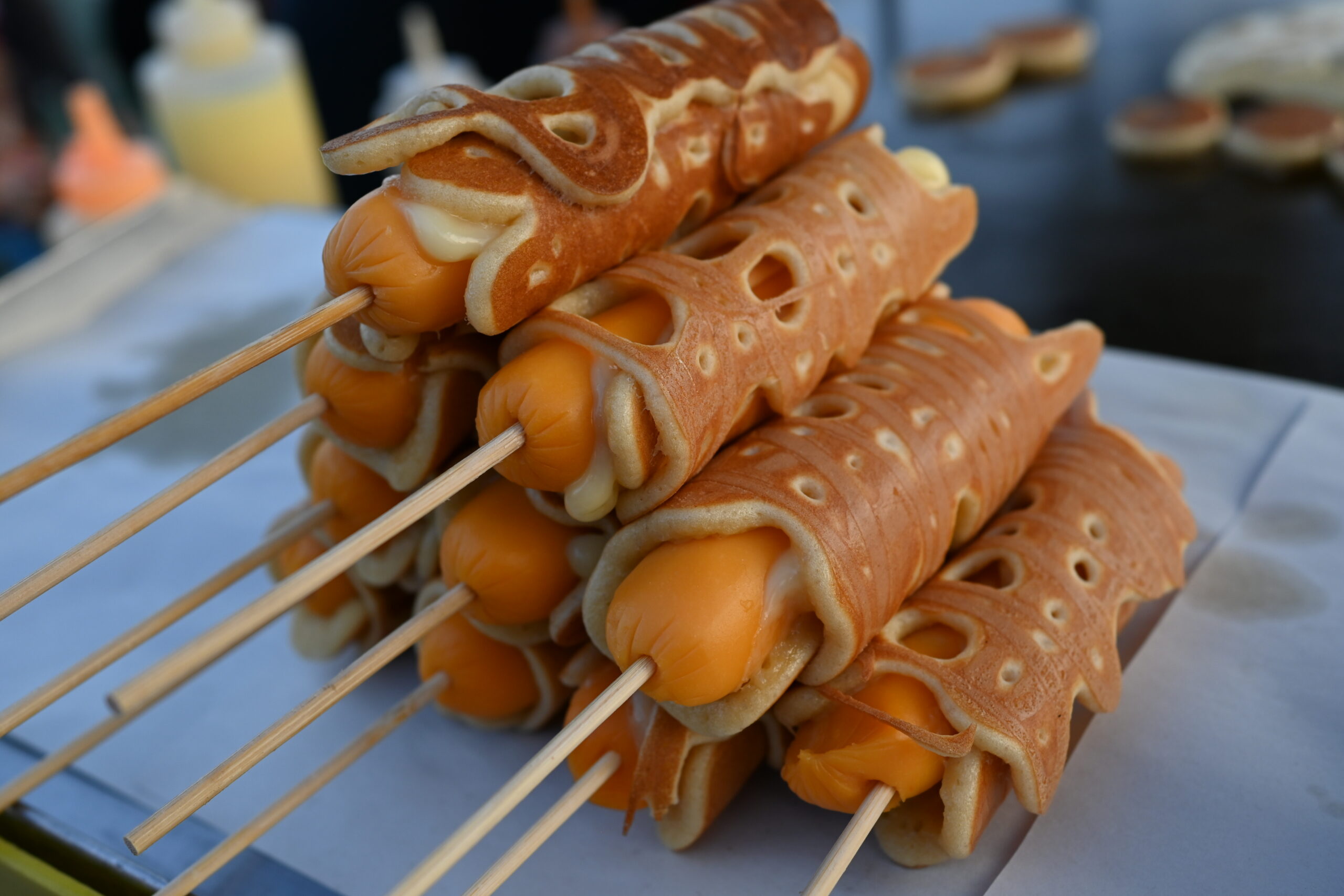
- Buldak fire noodles or a tteokbokki cup + cheese stick or corn dog + banana milk — This is the combo that shows up in half the “Korean convenience store haul” videos online, and for good reason: the dairy in the banana milk actually cuts the heat, it’s not just there for the aesthetic.
The Light/Cold Combo
- Sandwich or egg salad sandwich + boiled egg + iced americano — Closer to a Western grab-and-go breakfast, and popular with anyone who’s already running five minutes late for work.
The Dessert Finisher
- Soft serve or bagged ice cream + hot canned coffee — A hot-cold pairing that closes out any of the combos above, especially satisfying in winter when the temperature contrast does most of the work.
How Do You Actually Assemble a Combo, Step by Step?
If you’ve never touched the self-serve stations before, here’s the practical rundown so you’re not the person standing there frozen while a line forms behind you:
- Pick your base carb — triangle kimbap, a cup noodle, or a dosirak. Kimbap and sandwiches live in the fridge case, cup noodles in the noodle aisle, and lunch boxes usually on a separate chilled shelf near the register.
- Fill the cup noodle at the water dispenser if that’s your choice — press the button, hold the cup under the spout up to the fill line, then wait roughly the time printed on the lid before peeling it open. Opening early gets you crunchy noodles; nobody wants that.
- Microwave anything that needs heat — dosirak, corn dogs, and some kimbap varieties usually need somewhere between 30 seconds and about 2 minutes. There’s often a sign showing which button to press, and staff will step in if you look stuck.
- Grab your drink last so it isn’t warming up on the counter while you’re dealing with the microwave.
- Pay at the counter — cash, card, and mobile pay apps all work at nearly every location.
- Eat at the counter seating if it exists, or take everything out. Look for stools lined up by the window — that’s your cue.
One unwritten rule: at the eating counter, you clear your own trash and leave the spot roughly as tidy as you found it. There’s no table service here, so nobody’s coming to do it for you.
How Much Should a Good Combo Cost?
Prices shift by item, chain, and neighborhood, but as a general rule, a filling two-to-three item combo — say, a cup noodle, a triangle kimbap, and a drink — lands in roughly the same range as a cheap casual lunch elsewhere in the city, and is often less than a single drink at a coffee chain. It’s consistently one of the most budget-friendly ways to eat well in Korea, which is exactly why it doesn’t carry the same stigma that gas-station food might carry elsewhere.
A quick comparison to put it in perspective:
- Convenience store combo — fast, cheap, decent variety, ideal for solo eating or filling a gap between meals.
- Casual local restaurant — more flavor depth and bigger portions, but slower, pricier, and awkward if you’re eating alone at odd hours.
- Food delivery apps — great for staying in, but delivery fees and minimum order thresholds can make a single-person meal cost more than just walking to the corner store.
What Should You Avoid or Watch Out For?
A handful of practical pitfalls trip up almost every first-timer:
- Spice level surprises — buldak-branded items sold in Korea can be genuinely spicy, and while some travelers assume the export versions are toned down, Samyang has generally marketed these as the same fiery formula worldwide. If you’re sensitive to heat, pair it with something dairy-based rather than water, which barely helps at all.
- Expiry stickers on discounted items — stores mark down kimbap and sandwiches nearing their sell-by window with a colored sticker. It’s perfectly safe and a genuine discount, just make sure you’re planning to eat it that same day.
- Assuming every store has seating — smaller branches, especially in older residential neighborhoods, often skip the counter entirely. If sitting down matters to you, look for a larger storefront near a university or office district instead.
- Overloading on carbs — a classic beginner move is two starchy items and nothing fresh. Tossing in a hard-boiled egg or one of the small salad cups more stores now carry rounds the whole thing out.
- Ignoring the 1+1 or 2+1 stickers — these promo deals (buy one get one, buy two get one free) rotate weekly and can meaningfully cut your total if you’re already grabbing drinks or snacks.
What’s a Good Combo Checklist for First-Timers?
If memorizing specific items feels like overkill, just aim for this structure instead:
- One carb — kimbap, noodles, bread, or a lunch box.
- One protein — a boiled egg, cheese stick, corn dog, or whatever protein’s already built into a dosirak.
- One hot element — soup, noodles, or a microwaved item, especially worth prioritizing in cold weather.
- One cold/sweet element — a drink or small dessert to close things out.
Once that structure is second nature, you can walk into any CU, GS25, 7-Eleven, or emart24 in the country and build something solid without reading a single label all the way through.
자주 묻는 질문 (FAQ)
Is convenience store food actually good enough to count as a real meal in Korea?
Yes — this is everyday eating for a huge share of the population, not emergency food. Quality is generally solid, the lineup rotates constantly, and popular items can sell out the way a good bakery item might. It’s less about settling and more about efficiency.
What’s a good vegetarian-friendly convenience store combo?
Look for vegetable kimbap or plain rice-based triangle kimbap (check the label for meat or fish icons), a plain cup noodle without meat broth where available, boiled eggs, and the packaged salad cups more stores are starting to stock. Fully vegan options are still limited, so read labels carefully or ask staff if you’re unsure.
Can I sit down and eat inside a Korean convenience store?
Most mid-size and larger branches, especially near subway stations, universities, or office districts, have a small counter or a few stools for eating in. Smaller neighborhood stores often skip this, so if seating matters, look for a bigger storefront.
How much should I budget for a filling combo?
It varies by items and location, but a combo of a noodle cup, a kimbap, and a drink typically costs noticeably less than a casual restaurant meal in the same city — it’s one of the cheapest ways to eat a full meal in Korea.
Do I need to know Korean to order or use the hot water station?
Not really — everything is self-serve with visual cues, and most packaging includes pictures or simple icons even when the text isn’t in English. Staff are used to foreign customers figuring out the microwave and hot water station, and will usually step in to help if you look unsure.