Key Takeaway
There are two main ways to quote exchange rates: the ‘direct quotation method,’ which expresses foreign currency value in terms of one unit of domestic currency, and the ‘indirect quotation method,’ which expresses domestic currency value in terms of one unit of foreign currency. South Korea uses the direct method — for example, quoting how many won one US dollar is worth. At bank exchange counters, you’ll notice separate ‘buying’ and ‘selling’ rates, and understanding this distinction can help you avoid losing money when exchanging currency.

What Are the Different Ways to Quote Exchange Rates?
Exchange rate quotations fall into two broad categories. Since the meaning of the numbers changes entirely depending on which currency serves as the base, grasping this concept is the essential starting point for understanding exchange rates.
What Is the Direct Quotation Method?
This method expresses one unit of foreign currency in terms of domestic currency. For instance, ‘1 USD = 1,350 KRW’ shows how much domestic currency is needed to buy one unit of foreign currency. Most countries, including South Korea, use this approach.
- 1 US Dollar (USD) = 1,350 KRW
- 1 Euro (EUR) = 1,470 KRW
- 100 Japanese Yen (JPY) = 900 KRW (yen values are small, so they’re quoted per 100 units)
What Is the Indirect Quotation Method?
This method expresses one unit of domestic currency in terms of foreign currency. For example, ‘1 KRW = 0.00074 USD.’ This approach is rarely used in everyday life, though some countries (such as the UK historically with the pound) have adopted it. Its main drawback is that the resulting numbers are so small they’re hard to interpret intuitively.
How Does South Korea Quote Exchange Rates?
South Korea uses the direct quotation method, expressing the won amount based on one unit (or 100 units) of foreign currency. The phrase you often see in the news — ‘the won-dollar exchange rate is 1,350 won’ — reflects exactly this approach.
Why Is the Yen Quoted in Units of 100?
Because the won value of a single yen is very small (roughly 1 yen = 9 won), quoting it per unit would require frequent decimal points, making it harder to read. To avoid this, the exchange rate is conventionally quoted per 100 yen — which is why you’ll see figures like ‘900 won per 100 yen’ in the news.
There’s Also a Rule for Currency Pair Order
By international convention, exchange rates are written in the order ‘base currency/quote currency.’ For example, ‘USD/KRW’ indicates how many won one dollar is worth, which is the exact opposite of what ‘KRW/USD’ would mean. When reading news or financial reports, it’s important not to mix up this order.
Why Do Banks Quote Different ‘Buying’ and ‘Selling’ Rates?
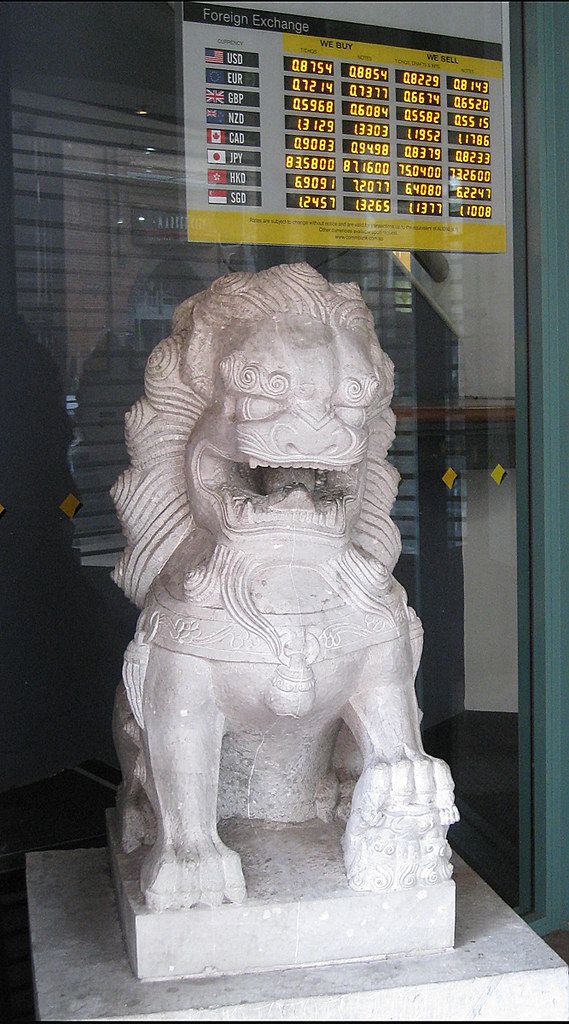
If you’ve ever exchanged money at an airport or bank counter, you’ve probably noticed more than one number listed for the same currency. This happens because banks apply a margin on top of the standard exchange rate (maemae gijun-yul).
What Is the Standard Exchange Rate?
The standard exchange rate is the benchmark rate set by the foreign exchange market, and individual banks build in a spread — a difference between their buying and selling rates — around this benchmark.
- Selling Rate (from the bank’s perspective): The rate applied when a customer pays won to buy foreign currency → higher than the standard rate
- Buying Rate (from the bank’s perspective): The rate applied when a customer exchanges foreign currency back into won → lower than the standard rate
In other words, the bank sells high and buys low, and this gap functions as the bank’s exchange fee. The higher your preferential exchange rate discount, the smaller this spread becomes — giving you more favorable terms.
A Practical Example
Assuming the standard rate is 1 USD = 1,350 KRW:
- When you buy dollars: 1 USD = 1,370 KRW (you pay more)
- When you sell dollars: 1 USD = 1,330 KRW (you receive less)
This roughly 40-won gap represents the bank’s margin. Using preferential rate coupons or exchange apps can shrink this margin, saving you real money on currency exchange.
Why Should You Know International Currency Codes?
Knowing the international standard currency codes (ISO 4217) makes it easier to read exchange rates accurately. Each code is a three-letter combination derived from the country and currency name.
- KRW: South Korean Won
- USD: US Dollar
- JPY: Japanese Yen
- EUR: Euro
- CNY: Chinese Yuan
When you see something like ‘USD/KRW 1,350’ in the news or a financial app, remember that the first currency (USD) is the base and the second (KRW) shows its value — this will keep you from getting confused.
What Changes Once You Understand Exchange Rate Quotations?
Properly understanding how exchange rates are quoted brings several practical benefits.
- You can minimize losses on overseas purchases and travel currency exchange. Knowing the gap between buying and selling rates helps you decide when and how to exchange money most advantageously.
- You can interpret news and economic indicators accurately. You’ll no longer be confused about how a ‘strong won’ versus a ‘weak won’ is reflected in exchange rate figures. When the exchange rate rises (e.g., from 1,300 to 1,350 won), the won’s value has actually fallen (weakened).
- You can calculate international transfers and investments correctly. Understanding the base currency/quote currency order reduces the risk of calculation errors.
Frequently Asked Questions (FAQ)
If the exchange rate rises, does the won’s value go up or down?
When the won-dollar exchange rate rises, it means more won is needed to buy one dollar — so the won’s value has actually fallen (weakened). Conversely, when the exchange rate falls, the won’s value has risen (strengthened).
When exchanging currency at a bank, should I look at the buying rate or the selling rate?
When converting won into foreign currency, check the ‘Selling Rate.’ When converting foreign currency back into won, check the ‘Buying Rate.’ The selling rate is typically higher than the buying rate.
Why does the standard rate differ from the actual rate I get when exchanging currency?
The standard exchange rate is the benchmark price set by the foreign exchange market. Banks add or subtract a margin (spread) from this benchmark to determine their actual buying and selling rates. This difference functions as the bank’s exchange fee.
Why is the yen exchange rate quoted per 100 yen?
Since the yen’s value relative to the won is low, quoting it per single yen would require many decimal places, hurting readability. To address this, the rate is conventionally quoted per 100 yen.
In a USD/KRW quote, is the first currency the base currency?
Yes. In ‘USD/KRW,’ USD is the base currency, and the quote shows how many won one dollar is worth. By international convention, rates are written in the order ‘base currency/quote currency.’