The short version: type “Busan Korea things to do” into any search bar and you’ll get the same seven names reshuffled — Haeundae, Gamcheon, Jagalchi, Haedong Yonggungsa — presented as if they’re all a short stroll apart. They’re not. Busan is a long, hilly coastal city split into two sightseeing clusters that sit on opposite sides of the map, and treating them as one continuous route is exactly why so many first-timers come home saying they “saw everything but enjoyed nothing.” Plan around the coast you’re on, not the popularity ranking, and the same landmarks stop feeling like errands.

What’s the first mistake people make planning things to do in Busan?
They assume Busan behaves like Seoul — a dense grid where one subway line eventually gets you anywhere within half an hour. It doesn’t work that way here. Busan hugs a long, jagged coastline, and its headline sights fall into two pockets that don’t share a direct subway connection:
- The east coast cluster: Haeundae Beach, Gwangalli Beach, and Haedong Yonggungsa Temple.
- The old town / west side cluster: Nampo-dong, BIFF Square, Jagalchi Fish Market, Gamcheon Culture Village, and Taejongdae on Yeongdo Island.
On a map, hopping from Gamcheon over to Haedong Yonggungsa looks like a quick cross-town trip. In practice, once you factor in the subway-to-bus transfer, it eats close to an hour each way — and that hour is exactly what turns an unhurried afternoon into a sprint between photo stops. Commit to one cluster per day, or one cluster per half-day if you’re only passing through, and the itinerary stops fighting you.
Should you start on the east coast or the old town side?
Neither side “wins” outright — it comes down to what kind of Busan you’re chasing.
- Start on the east coast if beaches, coffee shops with a view, and one striking temple silhouette are what you pictured — just know Haeundae on a summer weekend can feel more like a festival crowd than a beach day.
- Start in the old town if you want the working city — market noise, fish tanks, street food smoke, houses stacked up a hillside — and you don’t mind stairs.
With only one full day, the old town cluster usually wins by default: Nampo, Jagalchi, and Gamcheon link into a single walkable loop with no long gaps, while the east coast cluster wants to be spread across a lazy half-day plus an evening, not rushed through before lunch.
What’s actually worth doing on the east coast?
Haeundae Beach — go for the boardwalk, not just the sand
Step off at Haeundae Station (Line 2, exits 3–5) and you’re basically on the sand within a couple of minutes. Swim season officially runs from around early June through late August, but the wide boardwalk behind the beach — lined with cafes and late-night bars — is worth walking anytime from spring through early autumn. The catch: on a hot summer weekend, the beach turns into a wall of umbrellas, and you’ll spend more time stepping around towels than actually lying on one. If you want the postcard shot of open sand and blue water, show up at sunrise or on a weekday morning — it’s a different beach entirely.
Gwangalli Beach — the quieter, better-at-night option
Gwangalli is Haeundae’s smaller, calmer sibling — fewer swimmers, more cafes, and a skyline that does most of the work after dark. The Gwangan Bridge lights up in the evening, and walking the sand with that view in front of you is a genuine local habit, not just a tourist stop. The pairing that tends to work best: swim or sunbathe at Haeundae by day, then shift to Gwangalli for dinner and a slow evening walk.
Haedong Yonggungsa Temple — the seaside exception
Most of Korea’s famous temples — Bulguksa in Gyeongju, the mountain temples ringing Seoul — sit tucked into the hills, deliberately set apart from the coast. Haedong Yonggungsa breaks that pattern completely, built directly onto oceanfront rock, which is exactly why its photos look so different from every other temple you’ll see on a Korea trip. Entry is free, but tour buses roll in steadily from late morning through midday, so an early visit or any weekday is what buys you the cliffside walkways without a dozen strangers in every frame.
What’s worth doing in the old town — Nampo, Jagalchi, and Gamcheon?
Jagalchi Fish Market — eat, don’t just photograph
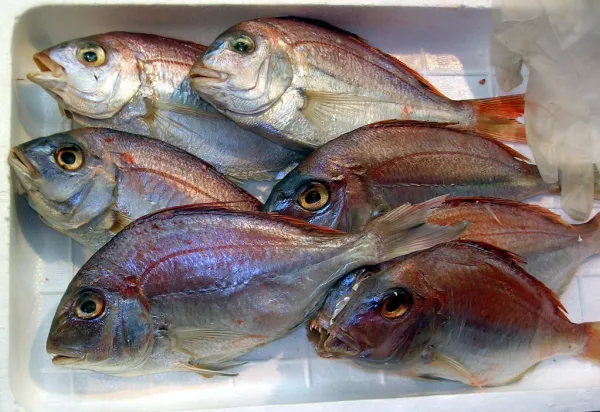
Jagalchi, a short walk from Nampo-dong and right by Jagalchi Station (Line 1), is Korea’s biggest seafood market, and wandering the aisles snapping photos is only half the experience. The other half is picking something still swimming out of a downstairs tank and having it prepared and served upstairs within minutes. Go around lunchtime, when the stalls are freshly restocked and the staff aren’t already winding down for the day. Expect to pay somewhere in the 15,000–30,000 KRW range per person for a simple seafood meal — not cheap by market standards, but hard to beat for how fresh it is.
BIFF Square — the snack stop between sights
BIFF Square, in the heart of Nampo-dong, takes its name from the Busan International Film Festival held here every October, but on any ordinary day it works as an open-air food court. The stall worth hunting down sells ssiat hotteok — a sweet, seed-packed pancake for roughly 1,500–3,000 KRW — and it’s the obvious mid-walk refuel between Jagalchi and wherever you’re headed next.
Gamcheon Culture Village — go before the tour buses
The pastel houses and mural-lined alleys near Toseong Station photograph beautifully, but Gamcheon is small enough that a single wave of tour groups can turn its narrow lanes into a slow shuffle. Arrive around 9–10am, ahead of the bigger groups, and you get the alleys mostly to yourself instead of queuing behind someone’s tripod. Set aside 1.5–2 hours to actually explore rather than rush through, and wear shoes built for hills — this is a village stacked up a slope, not a flat outdoor museum.
Taejongdae — the detour most first-timers skip, and shouldn’t
Cross onto Yeongdo Island and Taejongdae feels like an entirely different city — cliffs, a lighthouse, open ocean views, none of the market noise from a few kilometers away. Walking the full loop takes roughly 1–1.5 hours, or you can ride the small Danubi Train around the park for a few thousand KRW if you’d rather save your legs for Gamcheon’s hills later.
How do you actually get between the two sides — subway, bus, or taxi?
This is exactly where planning by zone pays off. Busan’s subway is cheap and reliable — a single ride costs roughly 1,400–1,700 KRW depending on distance (fares are periodically adjusted, so check current rates), and loading a T-money card (it works on buses too) saves you from queuing at a ticket machine every time you move. The complication is that two of the best-known sights, Haedong Yonggungsa and Taejongdae, don’t sit on a subway line at all — you’ll need a connecting bus or a short taxi from the nearest station to finish the trip. That’s a minor detail if you’ve already slotted them into their cluster for the day. It only becomes an actual problem when you try to squeeze one of them into a route that also includes old-town stops on the far side of the city.
- Subway wins for Haeundae, Gwangalli, Nampo, Jagalchi, and Gamcheon — each a short walk from a station.
- Bus or taxi wins for Haedong Yonggungsa and Taejongdae, where the final stretch simply isn’t on the rail map.
Where does Seomyeon fit into all this?
Seomyeon is Busan’s downtown proper — shopping streets, underground arcades, and restaurant blocks that stay busy well past midnight — sitting roughly midway between the two coastal clusters. It’s not a “sight” the way Gamcheon or Haeundae is, but it’s the most sensible base if you’re staying more than a night or two, since it puts both the east coast and the old town within easy subway reach. Treat it as your hub for sleeping, eating, and going out — not a box to check on the itinerary itself.
So how should you actually split your time?
With a single full day, take the old town cluster — Nampo, Jagalchi, Gamcheon, and Taejongdae if you’re moving efficiently — and save the east coast for next time. With two days or more, give each cluster its own full day rather than zig-zagging between them. The sights themselves almost never disappoint; what disappoints people is cramming both coasts into one day and walking away remembering the subway transfers better than the temple or the beach.
자주 묻는 질문 (FAQ)
How many days do you need in Busan?
Two full days covers the essentials comfortably — one for the old town cluster (Nampo, Jagalchi, Gamcheon, Taejongdae) and one for the east coast cluster (Haeundae, Gwangalli, Haedong Yonggungsa). One day still works fine if you commit to a single cluster instead of trying to cover both.
Is Haeundae Beach or Gwangalli Beach better to visit?
Haeundae is the bigger, livelier beach and the better pick for daytime swimming in season, while Gwangalli is quieter, more cafe-focused, and shines in the evening with views of the lit-up Gwangan Bridge. Many visitors do Haeundae by day and Gwangalli at night, and that pairing works well.
Do you need a taxi or car to reach Haedong Yonggungsa and Taejongdae?
You don’t need a car, but you do need a connecting bus or short taxi ride from the nearest subway station, since neither site sits directly on a subway line. Build a little extra time into your schedule for that last stretch instead of assuming subway access the whole way.
What’s the best time of year for Busan sightseeing?
Spring and autumn (roughly April–June and September–October) offer the most comfortable walking weather for both coasts. Summer (July–August) is swim season at Haeundae but also the most crowded and humid stretch, especially on weekends.
Is Gamcheon Culture Village worth the hype?
Yes, but timing matters — arriving around 9–10am, before the larger tour groups show up, makes a real difference, since the alleys and photo spots are narrow and get congested fast once midday hits.