Quick summary: Korean sunscreens have a reputation for being weightless, but that reputation was built mostly on gel and fluid formulas — plenty of Korean sunscreens are just as heavy or shine-inducing as anything you’d find elsewhere, especially the ‘glow’ and tone-up lines. This guide walks through what actually matters on the label (texture type, finish, alcohol content, PA rating), how the Korean sunscreen market differs from what you’re used to, and which ingredient cues signal ‘this will make oily skin worse by 2pm’ versus ‘this will actually behave.’

Why do Koreans obsess over sunscreen texture so much?
Walk into an Olive Young and you’ll see sunscreen sorted almost like a spice rack: watery, gel, cream, stick, cushion, tone-up, each with its own little shelf tag. That’s not a marketing gimmick — it reflects the fact that sunscreen in Korea is worn daily, under makeup, through humid summers and bone-dry winters, by people who are not going to tolerate a product that pills under foundation or leaves a greasy sheen by lunch. When a product is that non-negotiable, brands stop competing on SPF number alone and start competing on how it feels at hour six.
For oily or combination skin, that’s good news in theory — there’s a wider spread of low-shine options here than in most Western drugstore aisles. But the flip side is that the range is so wide it becomes a trap: a bottle marketed with words like ‘hydrating,’ ‘glow,’ or ‘moisture barrier’ is often built for dry skin, and slapping it on oily skin is like using a rich night cream as your daytime moisturizer. The Korean label system rewards people who actually read past the front of the bottle.
How is this different from sunscreen shopping outside Korea?
In a lot of Western markets, if you have oily or sensitive skin, dermatologists usually steer you toward mineral (physical) sunscreen, because chemical filters there have a reputation for feeling thick and greasy. Korea flips that logic almost entirely. Because Korean regulators (like Japan’s) approve a much broader set of modern UV filters, Korean chemical sunscreens tend to run thinner, sit more invisibly, and skip the white-cast problem — which is exactly the reason K-beauty sunscreen built a cult following abroad in the first place. The catch is that ‘Korean’ isn’t a texture guarantee on its own; a Korean gel and a Korean cream can behave like two completely different product categories, so you still have to check the finish rather than trusting the country of origin to do the work for you.

What should you actually look for on the label?
Ignore the front-of-bottle adjectives for a second and check these five things instead — they tell you more than any brand tagline will:
- Finish type: Hunt for ‘matte,’ ‘sebum control,’ ‘no shine,’ or ‘watery gel.’ Treat ‘glow,’ ‘dewy,’ ‘milk,’ and ‘tone-up’ as yellow flags — tone-up sunscreens in particular have a soft-focus, faintly moist finish that reads as an extra layer of oil once your own skin starts producing its own shine a few hours in.
- Texture category: Gel and ‘water-type’ or ‘fluid’ sunscreens generally sink in fastest and leave the least residue behind — think of the difference between patting on a toner versus rubbing in a body lotion. Cream-type sunscreens, even the well-loved Korean ones, tend to carry more emollients and get noticeably heavier as the day wears on.
- Alcohol content: A lot of Korean gel sunscreens lean on alcohol (denat.) to get that fast-drying, mattifying snap. It’s usually a non-issue for straightforwardly oily skin, but if your skin is also reactive or has a compromised barrier, alcohol-forward formulas can sting, dry you out, and ironically push your skin to produce even more oil to compensate.
- Silicones near the top of the ingredient list: Dimethicone and cyclopentasiloxane are what give Korean sunscreen that silky, primer-like glide. In moderate amounts they just help the product spread evenly — but if one shows up in the first handful of ingredients on a long list, expect more of a filmy, slightly suffocating feel by the afternoon, especially in heat.
- PA rating, not just SPF: Korean bottles list both SPF (UVB) and PA+ through PA++++ (UVA). For ordinary daily wear — commute, office, errands — SPF 30 to 50 with PA+++ covers you comfortably; chasing SPF50+ PA++++ for a regular Tuesday usually just means paying for a thicker formula you didn’t need.

Which Korean sunscreen types actually suit oily skin?
Chasing specific product names is a losing game — Korean brands reformulate constantly, and this year’s cult favorite is next year’s discontinued line. It’s more useful to shop by category than by hype:
Best-suited textures
- Watery/fluid gel sunscreens: These go on almost like a toner, set within a minute or so, and dry down to a matte-ish finish rather than a sheen. If you only remember one category from this guide, remember this one.
- Sebum-control or ‘no sebum’ labeled lines: Several Korean brands run a dedicated oily-skin version of their main sunscreen, often with silica or similar powders mixed in specifically to soak up surface oil through the day.
- Sunscreen sticks or cushions for touch-ups: Not usually your base layer, but genuinely handy for reapplying over makeup at midday without smudging your look — and oily skin needs that reapplication more often, since sunscreen tends to break down faster on skin that’s already producing more of its own oil.
Textures to be cautious with
- Tone-up or ‘glow’ sunscreens: Beautiful on dry skin, but often too moist and shine-shifting for oily skin by the time you hit your afternoon slump.
- Milk or lotion-type sunscreens: Marketed as lightweight, and they often are for normal skin, but the lotion-like slip can start feeling greasy on oily skin within an hour or two.
- Heavily fragranced or essential-oil-infused sunscreens: Common in some of the ‘natural’ Korean lines — pleasant to smell, but the added oils in the formula can work against you if you’re prone to clogged pores or closed comedones.
How do you actually test a Korean sunscreen before committing?
Online reviews help narrow the field, but skin is stubbornly personal — what one reviewer calls ‘matte’ can still feel like a wet raincoat on your face. Here’s a practical way to stress-test a new bottle before you build a routine around it:
- Apply a real layer, not a dab. Most people under-apply when they’re ‘just testing,’ which hides exactly how the formula wears. Use roughly what you’d use on an ordinary day — about a coin-sized dollop for the whole face.
- Let it fully set before judging. Nearly every sunscreen looks slightly wet or shiny straight out of the tube. Give it a good ten minutes or so — the real texture shows up once it’s actually settled, not while it’s still sitting on the surface.
- Blot with a tissue partway through the day. Press a tissue gently against your forehead, nose, and chin a few hours in. Some oil pickup is completely normal; if the tissue comes away soaked, that formula probably isn’t the one.
- Watch for pilling under makeup. If you layer sunscreen under foundation or cushion, keep an eye out for small rolled-up bits of product appearing an hour or two in — that’s usually a silicone or texture mismatch between products rather than proof the sunscreen itself is ‘bad,’ but it still means this combination doesn’t work for you.
- Give it a real trial before blaming breakouts. One rough day could be coincidence — new humidity, a new pillowcase, whatever. A pattern of new bumps in the same spots over a week or so of consistent use is the clearer signal to switch.
What’s a common mistake people make with oily skin and sunscreen?
The classic one: skipping sunscreen, or applying a token dab, because ‘it just makes my skin oilier.’ In reality, unprotected sun exposure damages the skin barrier over time, and a damaged barrier tends to produce more oil and more breakouts, not less. The fix was never to skip the sunscreen — it’s to switch to a formula that’s actually built for your skin type, and lean on a light oil-absorbing setting powder for extra shine control if you need it later in the day.
Chemical vs. mineral Korean sunscreens — which is better for oily skin?
This is one of the most common points of confusion for anyone coming to K-beauty from a Western routine, so here’s the practical breakdown:
- Chemical (organic) filters: This is basically what made Korean sunscreen famous — thin, invisible, no white cast. It’s generally the better starting point for oily skin because the formulas built around these filters tend to be lighter across the board. The tradeoff is that a small share of people are sensitive to specific filters and notice stinging or breakouts, so patch-test if your skin tends to react to new products.
- Mineral (physical) filters, zinc oxide/titanium dioxide: Gentler if your skin is sensitive, inflamed, or actively breaking out, but historically thicker, and more prone to a faint cast or a slightly greasy-looking finish once you sweat or the weather turns humid. Korean brands have gotten noticeably better at micronizing these to cut the heavy feel, but as a category, mineral sunscreen still tends to sit on top of oily skin rather than melting into it.
- Hybrid formulas: Plenty of newer Korean sunscreens blend a small dose of mineral filter with chemical filters, aiming for some of the gentleness without the full weight. Worth trying if straight chemical formulas irritate you but you still want that quick-absorbing feel.
If you’re new to Korean sunscreen and your skin is just plain oily — not especially reactive, not particularly acne-prone — the simplest first move is a well-reviewed chemical gel or fluid labeled for sebum control. It’s the safest bet for a first bottle.
Where’s the best place to buy it if you’re visiting Korea?
You don’t need to track down anything obscure — sunscreen for oily skin is a mainstream category in Korea, and it’s everywhere:
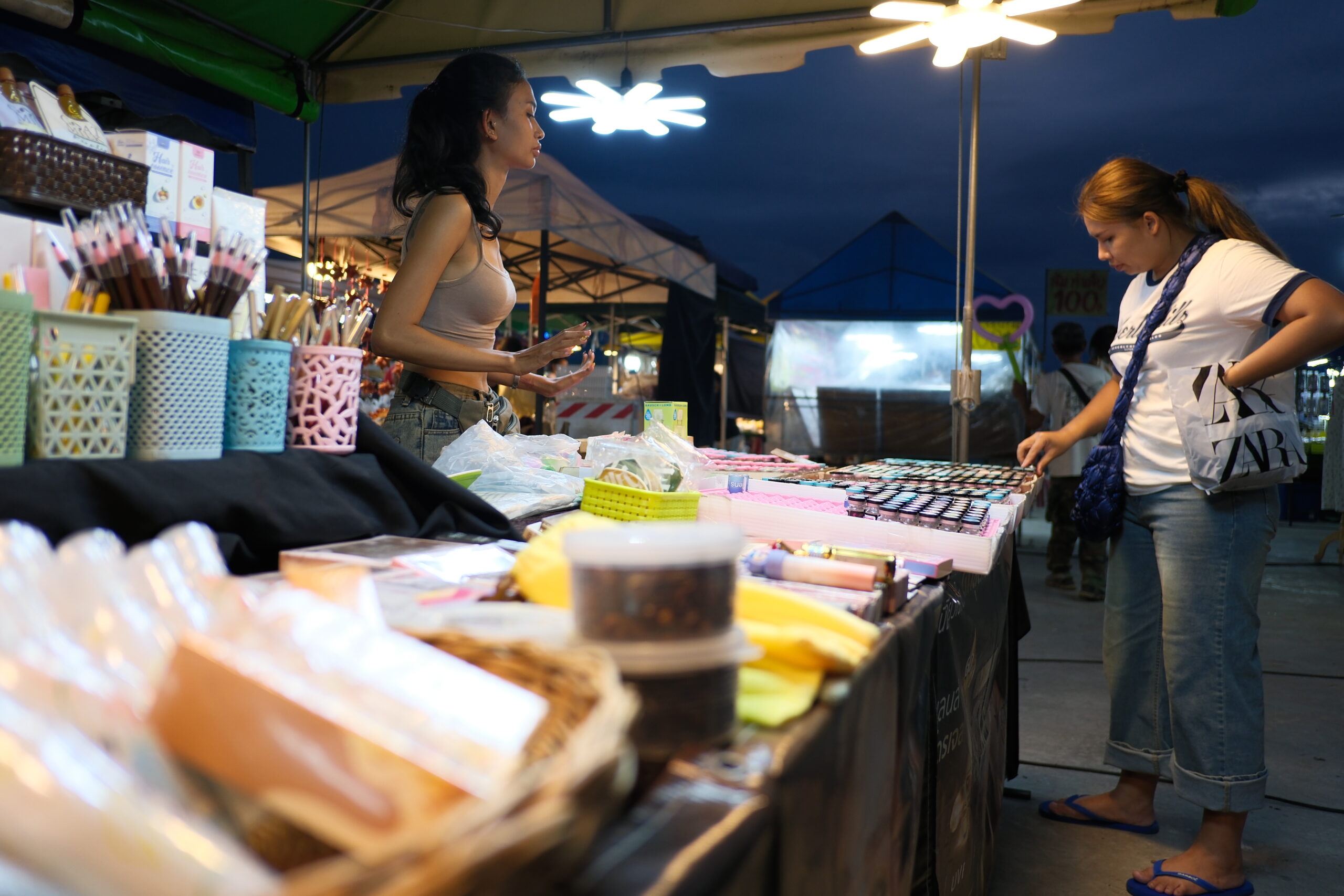
- Olive Young: The dominant K-beauty chain, with branches in basically every neighborhood of Seoul and other major cities. Staff can point you straight to the ‘sebum control’ or ‘oil-free’ shelf, and many stores let you test a bit on the back of your hand before you buy.
- Daiso: Don’t underestimate it — there are solid budget gel-type sunscreens here, useful for a cheap trial run before you commit to a full-size premium bottle you might not love.
- Duty-free and airport shops: Convenient on the way out, but the selection leans toward whatever’s currently trending rather than what actually suits oily skin, so it’s smarter to buy mid-trip once you’ve had a chance to browse or test in a regular store.
Shopping online from outside Korea? Check that the listing actually specifies the finish — gel, fluid, matte — rather than trusting the brand name alone. The same brand regularly sells wildly different textures under one umbrella line, so the name on the box tells you less than you’d think.
How much sunscreen should oily skin actually use, and how often?
A persistent myth is that oily skin should use less sunscreen to keep shine down. In practice, using too little just means you’re under-protected — most people already apply well below the amount needed for the labeled SPF to work as advertised. A sensible daily approach looks like this:
- Morning application: A generous, even layer — resist the instinct to skimp just because your skin already feels oily before you’ve even started.
- Reapplication indoors: If you’re mostly indoors near windows or under office lighting, reapplication is less urgent than for direct outdoor sun, but a quick midday touch-up is still worth it if your skin is particularly UV-sensitive.
- Reapplication outdoors: Roughly every couple of hours in direct sun is the general guideline dermatologists give regardless of skin type — oily skin doesn’t get a pass here, it just benefits more from a stick or cushion for easy touch-ups over makeup without ruining your look.
자주 묻는 질문 (FAQ)
Is Korean sunscreen good for oily, acne-prone skin?
Yes, generally — Korean formulas tend to be lighter and less greasy than many Western sunscreens because of the wider range of modern chemical filters used. That said, not every Korean sunscreen suits oily skin; tone-up, glow, and milk-type formulas can still feel heavy. Look specifically for gel, fluid, or sebum-control labeled products.
Should oily skin use gel or cream Korean sunscreen?
Gel or watery/fluid types are usually the safer choice. Cream-type Korean sunscreens can still be lighter than Western creams, but they typically contain more emollients and are more likely to feel heavy by afternoon on oily skin.
Does Korean sunscreen cause breakouts?
It can, but it’s usually about the specific formula rather than Korean sunscreen as a category. Heavier emollients, certain silicones, or fragrance can trigger breakouts in acne-prone skin. Patch-testing a new bottle for about a week before full daily use helps catch this early.
What SPF and PA rating is enough for daily wear with oily skin?
For most everyday city use, an SPF in the 30–50 range with a PA+++ rating is sufficient. Very high SPF/PA++++ formulas aren’t necessarily better for daily protection and sometimes feel thicker, so they’re more useful for full days outdoors than routine wear.
Can I skip sunscreen if my skin already looks shiny?
No — skipping sunscreen doesn’t reduce oiliness, and unprotected sun exposure can actually worsen skin issues over time. The better fix is switching to a lightweight, mattifying formula rather than skipping protection altogether.