Key Takeaway
On days when Bitcoin swings more than 10%, headlines tend to pin the blame on a single cause. But in reality, sharp rallies usually happen when several forces converge at once: the broader liquidity environment (interest rates and the dollar), the supply structure (halving cycles), shifting demand (institutional money and ETFs), and psychological momentum (leveraged liquidations). Bitcoin’s entire market cap is roughly comparable to that of a single company like Apple, which means capital flows that would barely register in the stock market can send its price swinging wildly. Once you understand this structure, you won’t need a headline to explain ‘why it went up’ — you’ll be able to answer that question yourself.
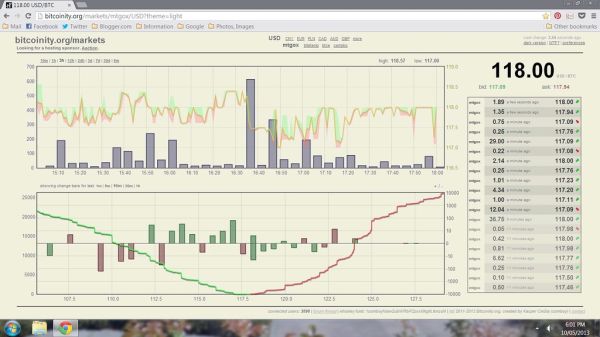
Why Is Bitcoin More Volatile Than Stocks?
To understand what drives Bitcoin’s sharp price surges, you first need to grasp just how small this market’s ‘container’ actually is. Bitcoin’s total market capitalization hovers around $1.3 trillion — roughly the size of a single mega-cap stock like Apple or Nvidia. Compare that to the U.S. Treasury market, which exceeds $27 trillion, or global equity markets combined, which top $100 trillion. When the container is small, pouring in the same amount of water makes the water level rise much faster.
In practice, it’s common to see Bitcoin jump more than 5% on buying pressure of just $500 million to $1 billion in a single day. The same amount of money flowing into the entire S&P 500 would barely move the index by a fraction of a percent. Three structural factors explain this gap.
- Thin liquidity: When sell orders are sparse at certain price levels, a single large buy order can blow through multiple price tiers, causing the price to leap in steps rather than move smoothly.
- 24/7 trading: Even after Wall Street closes for the night, a large buy order originating from Asia or the Middle East gets reflected in the price instantly. That’s why you often wake up to headlines about an ‘overnight surge.’
- Heavy derivatives exposure: On many days, trading volume in futures and options exceeds that of the spot market, meaning leveraged positions can amplify even small price moves several times over.
What Are the Core Drivers Behind Bitcoin Rallies?
Looking back at past rally phases, the following five factors rarely act alone — it’s usually their overlap that fuels the biggest price surges.
- Expanding macro liquidity: When central banks cut interest rates or inject liquidity into the financial system, capital tends to rotate from safe assets into riskier ones. Bitcoin, with a higher beta than even Nasdaq growth stocks, is often the first and biggest beneficiary of this liquidity expansion.
- Reduced supply after halving: Roughly every four years, a ‘halving’ event cuts mining rewards in half, slashing the daily supply of newly mined coins. With demand unchanged and supply shrinking, upward price pressure builds gradually over time.
- Wider channels for institutional capital: Products like spot ETFs allow banks and pension funds to gain exposure without regulatory risk, opening the door to capital inflows on a completely different scale than retail buying.
- Supply shock from shrinking exchange reserves: As long-term holders move coins into cold wallets, the amount of freely tradable supply on exchanges shrinks. In a market running dry on available supply, even modest buying can trigger outsized price reactions.
- Short squeezes: When leveraged short positions betting on a price drop get forcibly liquidated by a rising price, exchanges are forced to buy back the liquidated positions at market price — triggering a chain reaction where buying begets more buying. Time and again, hundreds of millions to billions of dollars in short positions have been wiped out in a single day, sending prices spiking in an instant.

Does the Halving Actually Cause Price Surges?
The ‘halving’ is the term most frequently invoked when explaining Bitcoin’s price surges. Four halvings have occurred so far — in 2012, 2016, 2020, and 2024 — and it’s true that in the first three cases, major bull runs followed within six to eighteen months of the event.
But here’s where many people get it wrong: the price has never jumped immediately on the day of a halving. In fact, there have been stretches where the price stagnated or even dipped in the weeks right after a halving. The supply-reduction effect builds up gradually over months, and the actual surges only materialized when other factors — like rate cuts or fresh capital inflows — coincided with the timing of the halving.
- The halving is simply a supply-side backdrop, not a switch that instantly flips the price upward.
- We should also be honest about the fact that we only have three data points to go on. It’s like rolling dice three times and getting a six each time — that doesn’t guarantee a six on the fourth roll.
- It’s worth remembering that crashes of over 60%, unrelated to the halving cycle, also occurred in 2018 and 2022.
How Does Institutional Money Trigger Rallies?
What’s changed noticeably since spot ETFs were approved is the ‘character’ of the incoming capital. In the past, short-term retail trading dictated daily price swings. Money flowing in through ETFs, by contrast, tends to come from pension funds and asset managers who buy once and hold for months or years.
On any given day, this capital might not look particularly large in trading volume terms. But it creates a steady drumbeat of daily net buying that gradually absorbs the circulating supply left on exchanges. In a market running low on available coins, even relatively small buy orders can trigger sharp price jumps — much like how draining a pool little by little eventually causes the water level to drop suddenly and dramatically.
If you want to track this trend yourself, here are three indicators worth watching.
- Daily ETF net inflows/outflows: Asset managers disclose fund flow data daily. Several consecutive days of net outflows can serve as an early warning sign of a short-term pullback.
- Changes in exchange balances: On-chain data platforms track exchange holdings over time. A steadily declining balance signals that available supply is drying up.
- Open interest: A rapid buildup of leverage in the futures market over a short period signals a correspondingly higher risk of liquidations in the opposite direction.

What Traps Do Beginners Fall Into During a Rally?
Understanding what drives Bitcoin’s surges is only half the battle — it’s equally important to recognize the psychological traps that come with rally conditions.
- Chasing the top: When ‘new all-time high’ starts trending on news portals, that’s often precisely when a short-term correction is looming. If you’re learning the ‘reason’ from a news article, chances are it’s already priced in.
- Overconfidence in leverage: During rallies, ads for 3x and 5x leveraged products noticeably multiply. Stack leverage on top of an already volatile asset, and a correction of just around 20% can wipe out your entire principal.
- Blind faith in the halving ‘myth’: Some investors pile in aggressively simply because they believe ‘prices always rise after a halving.’ A pattern based on just three or four data points is a reference point, not a guaranteed law of the market.
- Relying on a single indicator: Making investment decisions based solely on ETF inflows, or solely on the halving cycle, is risky. It’s worth building the habit of cross-checking whether at least two or three of the five factors covered in this article are pointing in the same direction.
Practical Checklist
- ☐ Have you determined whether the current rally is driven by macro liquidity (like rate cuts) or a specific catalyst (ETFs, halving)?
- ☐ Have you checked whether open interest in the futures market has spiked sharply in the past few days?
- ☐ Are you investing only with money you can afford to lose entirely, without using leverage?
- ☐ Is the reason behind the current rally ‘old news’ that’s already been widely reported across multiple outlets?
Final Thoughts: Does Knowing the Cause Mean You Can Time the Market?
Understanding the structural forces behind Bitcoin’s surges is a starting point for investment decisions — not a tool that pinpoints the exact moment to buy or sell. Perfectly predicting when liquidity, halving cycles, and institutional flows will all converge is a challenge even for full-time professional traders.
Still, if you can calmly break down ‘why it’s rallying right now’ into these five factors when a surge hits, you can meaningfully cut down on impulsive, headline-driven chasing. Ultimately, the real value of understanding these causes isn’t prediction — it’s giving yourself the composure to pause and think while everyone else is caught up in the excitement.
Frequently Asked Questions (FAQ)
Can Bitcoin’s biggest rallies be traced back to a single cause?
No. Most surges occur when multiple factors converge — expanding macro liquidity, reduced supply from the halving, institutional capital inflows, and leveraged liquidations. News coverage often highlights just one reason for simplicity, but in reality, at least two or three factors are usually at play simultaneously.
Does the price always rise after a halving?
After each of the past three halvings, major bull runs followed within a few months to a year and a half — but that’s a very small sample size to draw conclusions from. There have been periods right after halvings where prices stagnated or even fell, and the actual surges only gained momentum when other factors, like rate cuts or new capital inflows, aligned with the timing.
Why does ETF inflow have such a big impact on price?
Capital flowing in through ETFs often comes from long-term investors like pension funds, leading to steady daily net buying. This gradually shrinks the supply of coins available on exchanges, and in a market running low on supply, even small shifts in demand can trigger outsized price reactions.
What should beginners be most careful about during a rally?
Two things: chasing the price after seeing ‘all-time high’ news that’s already widely circulated, and overusing leveraged products. Given how volatile the asset is, a correction of around just 20% can be enough to trigger forced liquidation of leveraged positions.
Why is Bitcoin more volatile than stocks?
Bitcoin’s total market cap is roughly the size of a single company like Apple, making the overall market quite small. It also trades around the clock, and trading volume in derivatives like futures and options often exceeds that of the spot market — meaning relatively small amounts of capital can move the price significantly.