Key Takeaways
① You can check the real-time value of 1 US dollar in Korean won through banking apps, portal searches, or the Bank of Korea’s website — though the figure displayed is usually the ‘base exchange rate’ (maemae gijunyul).
② When you actually exchange currency, the buying rate (for purchasing cash) and selling rate (for selling cash) differ, and this gap — the spread — is the core cost of currency exchange.
③ Exchange rates shift daily due to a mix of factors like US interest rates, trade balances, and safe-haven demand, so no one can say for certain whether ‘now’ is the best time to buy.
④ Still, there are practical strategies you can use to time your currency exchange more favorably.
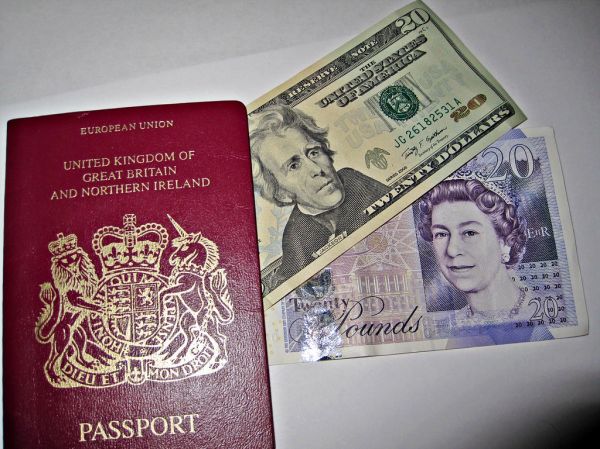
Where Can You Check the Current USD-to-KRW Exchange Rate?
One of the most common mistakes is assuming that the number shown on a search engine is the actual rate you’ll get when exchanging money. Rates that appear on Naver, Google, and similar platforms typically reflect the base exchange rate — a benchmark figure used for interbank transactions, not the rate you’ll actually receive. When you convert won to dollars (or vice versa) at a bank counter or through an app, fees are added to or subtracted from this base rate.
To get an accurate, real-time figure, it’s worth checking these three sources together:
- The Bank of Korea’s Economic Statistics System (ECOS): This gives you the official base rate along with historical trends, helping you judge whether today’s rate is higher or lower than usual.
- Your bank’s app: Major Korean banks like Woori, Shinhan, and KB Kookmin have dedicated menus for ‘real-time exchange rates’ and ‘exchange rate discount coupons,’ letting you see exactly what rate you’ll get when you exchange.
- Portal exchange rate widgets: Handy for a quick overview of trends, but they may not be precise down to the decimal, so it’s best to double-check with your bank app before making a final decision.
For reference, over the past few years, the won-dollar rate has generally fluctuated within a range of roughly the mid-1,200s to the 1,400s per dollar. Since the exact figure at any given moment keeps changing, using this range as a reference point is a practical way to judge whether the current rate is historically high or low.

Why Do Buying and Selling Rates Differ?
This is where people get confused when exchanging money at a bank. Even at the same bank, at the same moment, the rate applied when ‘you pay won to buy dollars’ differs from the rate applied when ‘you hand over dollars to receive won.’ For example, if the base rate is 1,350 won, here’s roughly how it plays out in practice:
- Cash buying rate: Base rate + about 1.5–2% (e.g., around 1,370 won) — applied when you use won to buy dollars
- Cash selling rate: Base rate − about 1.5–2% (e.g., around 1,330 won) — applied when you convert dollars back into won
- Wire transfer rate: The spread is much narrower, making this a better option for overseas remittances or card payments
This gap — the spread — is essentially the bank’s exchange fee. That’s why, when converting travel cash, how much of a discount you get on this spread makes a real difference to your bottom line. Keep in mind that a ‘90% exchange rate discount’ means the bank is cutting 90% off this spread — not that the base rate itself has dropped.
Why Does the Exchange Rate Keep Changing Every Day?
Many people check exchange rates daily like they would check the news, yet still have only a vague sense of why the numbers move. In reality, the factors driving exchange rates fall into four main categories:
- The US-Korea interest rate gap: When US interest rates are higher than Korea’s, investors tend to favor dollar assets over won, pushing up the value of the dollar and putting upward pressure on the exchange rate (i.e., weakening the won).
- Trade balance: Strong exports bring more dollars into the country, boosting the won’s value (lowering the exchange rate), while heavy imports send dollars flowing out, having the opposite effect.
- Safe-haven demand: When global economic uncertainty rises, investors tend to flock to safe-haven currencies like the dollar or yen rather than emerging market currencies, which tends to weaken the won.
- Supply, demand, and market sentiment: The settlement timing of major exporters and importers, along with foreign investors’ buying and selling of Korean stocks and bonds, can also drive short-term volatility.
It’s rare for all four factors to move in the same direction at once, which is exactly why exchange rates are so hard to predict in the short term. This is also why even experts can’t reliably forecast next week’s rate.
A Practical Checklist for Minimizing Losses When Exchanging Currency
Rather than trying to predict which way rates will move, it’s far more useful in practice to know how to get a better deal at whatever the current rate happens to be.
- Use your bank app’s exchange rate discount coupons: Applying in advance through the app and picking up your cash at the airport or a branch — rather than exchanging on the spot at a counter — can often get you a discount of up to 90% on the spread.
- Use travel cards for small amounts, exchange cash for larger sums: Travel-focused cards like Travel Wallet or Travelog lock in the rate at the moment you load funds and typically come with lower fees, making them a good fit for travel expenses you’ll spend gradually.
- Treat airport exchange counters as a last resort: While convenient, airport exchange counters tend to have the widest spreads, so it’s best to use them only for small, urgent conversions.
- Set up rate alerts: Using the ‘target rate alert’ feature in your bank app lets you get notified when the rate hits your desired level, helping you avoid missing a good window due to emotional decision-making.
- Split up large exchanges: Rather than converting a large sum all at once, spreading it across two or three transactions can reduce the risk of exchanging everything at an unfavorable peak.
For large transactions — like tuition payments or overseas remittances — even a 0.5% difference in the rate can add up to hundreds of thousands of won. For instance, sending $10,000 at a rate of 1,330 won versus 1,350 won results in a difference of about 200,000 won. For amounts like this, spending ten minutes comparing remittance rates and discounts across banks is well worth the effort.
How Does a Rising or Falling Dollar Rate Affect Your Everyday Life?
Exchange rates aren’t just a number that matters to travelers. When the rate rises (meaning the won weakens), the cost of overseas travel, studying abroad, imported raw materials, and overseas online shopping all tend to climb, pushing up the cost of living people actually feel. On the other hand, a weaker won improves the price competitiveness of Korean exporters, which can be good news for those in export-driven industries. In other words, the same rate increase can be a burden for some and an opportunity for others — so rather than simply viewing it as ‘up’ or ‘down,’ it’s worth interpreting the exchange rate in light of your own situation, whether that’s an upcoming trip, an overseas investment, or work tied to trade.
Frequently Asked Questions (FAQ)
What’s the most accurate way to check today’s USD-to-KRW rate?
The most reliable sources are the Bank of Korea’s Economic Statistics System (ECOS) or the ‘real-time exchange rate’ menu in your bank’s app. Portal search results reflect the base rate, which can differ from the rate you’ll actually receive, so it’s best to double-check through your bank app right before exchanging.
Why is the base exchange rate different from the rate I actually get?
The base rate is simply a benchmark used for interbank transactions. When you personally exchange money at a counter or through an app, the bank adds or subtracts its fee (the spread) from this base figure — applying a higher rate when you buy and a lower rate when you sell.
When is the best time to exchange currency?
Pinpointing the exact bottom of the market is essentially impossible. A more realistic approach is to set a target rate alert and split large sums into two or three separate exchanges, spreading out the risk instead of converting everything at once.
Is it a bad idea to exchange money at the airport?
Airport exchange counters are convenient but generally offer lower discounts, resulting in wider spreads. Applying for an exchange through your bank app ahead of time and picking up the cash at the airport typically gets you a much better rate.
Is a rising exchange rate always bad?
Not necessarily. It’s a burden for people planning overseas travel, study abroad, or international online shopping, but it can actually benefit exporters or those holding overseas assets. The impact depends entirely on your individual situation.