Key Takeaway
You’ve probably seen it: one post in an online forum claims ‘3kW solar setup, saving $45 a month,’ while another posted the same day says ‘barely saving $15.’ Both are true. The difference comes down to just two things: regional sunlight levels and how much electricity you use during daylight hours. Even with identical system capacity, a slightly off orientation or afternoon shade can create a 30%+ gap in monthly output. This article breaks down how much to trust the numbers in online reviews, how to calculate your own break-even point, and exactly what questions to ask installers before signing anything.
Why Do Solar Panel Reviews All Tell Different Stories?
Search for ‘solar panel reviews’ and you’ll mostly find posts at opposite extremes. One person says their electricity bill is practically nothing now; another says they took out a loan to install panels and still hasn’t broken even. Neither is lying. Their installation conditions were simply different from the start.
Many of the factors that determine actual output rarely get mentioned in these reviews.
- Regional sunlight exposure: Even with identical 3kW systems, annual output can differ by 15-20% between coastal regions like Mokpo and Suncheon in South Jeolla Province and mountainous areas like Inje or Jeongseon in Gangwon Province. Solar irradiance maps published by the Korea Energy Agency show that the gap between southern coastal areas and inland mountain regions is larger than most people expect.
- Orientation: If due south represents 100% efficiency, east- or west-facing installations typically drop to 85-90%. A rooftop that’s slightly southwest-facing isn’t a major issue, but if it’s fully east- or west-facing, you need to redo your cost-benefit calculations before installing.
- Tilt angle: For Korea’s latitude, 30-35 degrees is optimal. Flat installations with no tilt perform reasonably well in summer, but efficiency drops noticeably in winter when the sun sits lower in the sky.
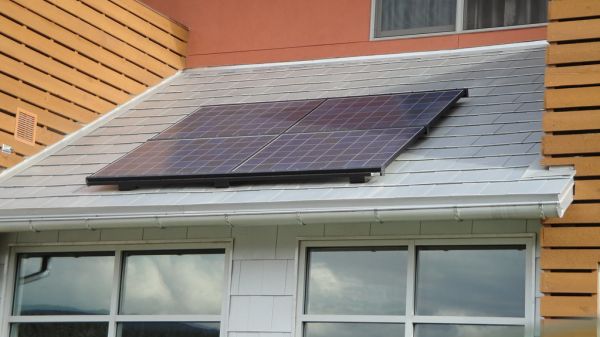
- Shading: Panels are usually wired in series, so even if a neighboring building’s shadow covers just one or two panels, output from that entire string can drop sharply. It’s common for a system to perform fine in the morning but lose output every afternoon around 2-3 PM once a neighbor’s roof casts a shadow.
This is why, when reading reviews, a claim like ‘350kWh a month’ matters far less than knowing what percentage that represents relative to a 3kW system, and where exactly (what region, what orientation) the system is located. A review missing this context isn’t really worth much as a reference point.

What Counts as Normal Output?
According to statistics from the Korea Energy Agency’s New and Renewable Energy Center, a typical residential 3kW solar system in Korea generates 3,600-4,200 kWh annually. That works out to a monthly average of 300-350 kWh, but the output isn’t evenly distributed—seasonal variation is substantial. May and June can exceed 400 kWh, while a few snowy days in December or January can drag monthly output below 200 kWh.
If you come across a review claiming ‘500 kWh a month from a 3kW system,’ work through these three checks in order.
- Verify the actual capacity listed on the installer’s quote is really 3kW. It’s not uncommon for systems labeled ‘3kW-class’ to actually include 4kW or more of panels—in which case, of course the output would be higher.
- Check whether the data covers a single peak month like May or June, or a full year’s average. It’s common for people to post only their best spring readings.
- Determine whether the figure comes from the inverter display or the utility company’s meter reading. Inverters can show readings 5-10% higher than actual output due to their internal calculation methods, so meter readings are the more accurate benchmark for comparison.
On the flip side, if you see a review claiming under 100 kWh a month, first rule out shading and orientation problems. If those don’t explain it, suspect an inverter malfunction or wiring issue. Before filing a service request, ask your installer for the monitoring app logs showing output by string—it’s the fastest way to pinpoint the cause.
Installation Costs and Break-Even Point: How Do You Verify the Numbers in Reviews?
As of 2024-2025, out-of-pocket costs for a residential 3kW installation—after local government subsidies—typically run between 1.5 million and 2.5 million won (roughly $1,100-$1,900). Some Seoul districts offer generous subsidies that bring out-of-pocket costs down to around 1 million won, while regions that have already exhausted their subsidy budgets can push costs up toward 3 million won. This means any review citing an installation price is only meaningful if it also specifies the region.
Comparing this installation cost against actual electricity savings produces very different payback periods.
| Condition | Estimated Monthly Savings | Payback Period |
|---|---|---|
| High self-consumption (home during the day, EV charging, etc.) | $30-$45 | 3-4 years |
| Low self-consumption (dual-income household, empty during the day) | $8-$15 | 8-10+ years |
The single biggest factor determining payback period is whether you’ve signed a surplus power settlement agreement with the utility company. If you’re away during the day and can’t use the power your panels generate, having a contract to sell that surplus back to the utility means it gets credited against your bill instead of going to waste—dramatically shortening your payback period. Without that agreement, a significant portion of the power generated during the day simply goes unused. When you see one reviewer claiming a 3-year payback and another saying 10 years, this settlement agreement is usually the reason why.
Things to confirm before installation:
- Your actual daytime (10 AM-4 PM) electricity usage pattern—whether you work from home, and when you run the AC or charge an EV
- Your local government’s subsidy announcement and your expected out-of-pocket cost (budgets get exhausted at different times each year)
- Warranty terms—5-10 years for inverters and 20-25 years for panels is standard; ask why if you’re offered less
- Whether you can directly monitor real-time output and grid settlement details through a monitoring app
What Exaggerated Claims Should You Watch For in Reviews?
If you spot these phrases in a blog post or forum review, dig a little deeper before taking them at face value.
- ‘My electricity bill dropped to zero’: Base fees, VAT, and the electricity fund contribution get charged every month regardless of how much power you generate. A truly $0 bill is essentially unheard of—most of these claims are exaggerating what’s really just the usage-based portion of the bill hitting zero.
- ‘Broke even in just 3 months’: This is likely mixing subsidy amounts with actual savings, or based solely on data from May or June, the peak output months. You need at least a full year of seasonal data to calculate an accurate payback period.
- Sponsored reviews posted directly by installation companies: If a post heavily emphasizes output figures but includes no meter photos or monitoring app screenshots, there’s no way to verify any of it.
Trustworthy reviews, on the other hand, tend to honestly mention how much output dropped on cloudy days or in winter, and even how long a service request took to resolve. Prioritizing reviews that mention frustrations alongside the positives—rather than ones that list only benefits—is the best way to reduce your chances of a bad outcome.

Frequently Asked Questions
How much does a solar installation actually reduce electricity bills?
For a 3kW system, monthly savings of roughly $8-$45 is the typical range. Households with high daytime electricity use (working from home, EV charging, etc.) see larger savings, while dual-income households that are away during the day see noticeably smaller savings unless they’ve arranged a surplus power settlement contract.
Can I trust the output figures in solar panel reviews?
Inverter displays can read 5-10% higher than actual output, so utility meter readings are more reliable. When evaluating a review, check the system’s capacity in kW, which season the data covers, and whether meter photos or reading records were included.
How much does solar output drop in winter?
Due to reduced sunlight intensity and shorter daylight hours, output typically drops 40-50% compared to summer. Snow accumulation can halt generation entirely, so you shouldn’t judge a system’s overall performance based on winter output alone.
Where can I check available installation subsidies?
Annual subsidy announcements are posted on the Korea Energy Agency’s New and Renewable Energy Center website and your local government’s website. Since subsidy amounts, eligibility requirements, and budget exhaustion timing all vary by region and year, check the latest announcement right before installing.
How long do solar panels last?
Panels themselves typically carry a 20-25 year performance warranty, and many continue functioning well beyond that. Inverters, however, have a shorter lifespan and may need inspection or replacement every 5-10 years.